Repair & Maintenance
Repairs on the trip
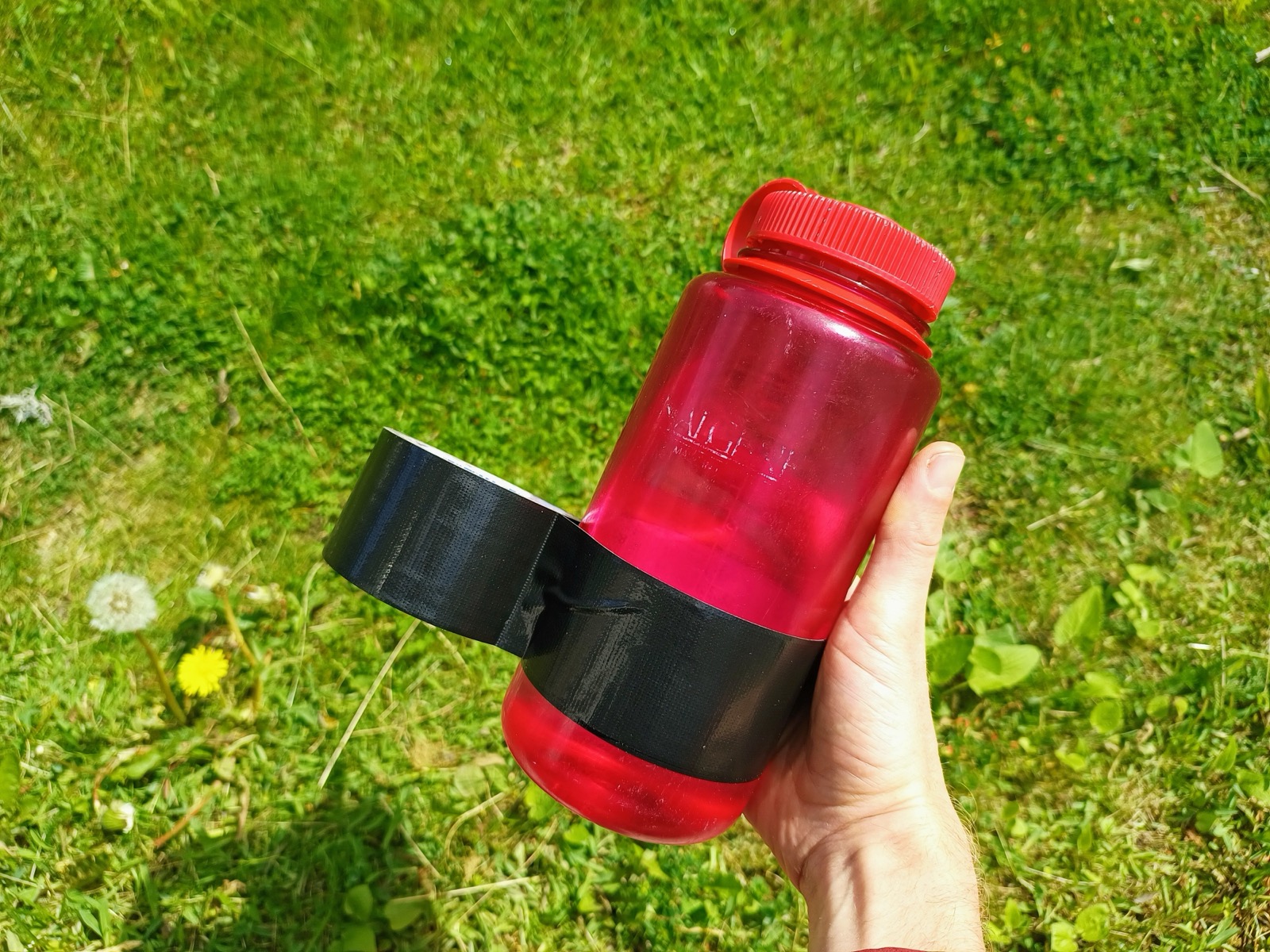
It is especially unfortunate when equipment breaks in the middle of a trip. A tent pole that snaps, a zip that gets damaged, or guy-line attachment points that give way.
It is especially unfortunate when equipment breaks in the middle of a trip. A tent pole that snaps, a zip that gets damaged, or guy-line attachment points that give way. Here is a list of personal equipment that is handy to have in your pack, and shared equipment where it is enough for one person in the party to carry it.
Contents
Personal
If you wind the tape a little below the grips on your ski poles, you also get a good hold a little lower down. That can be useful on steep climbs, or when you walk across a slope with one pole higher than the other.
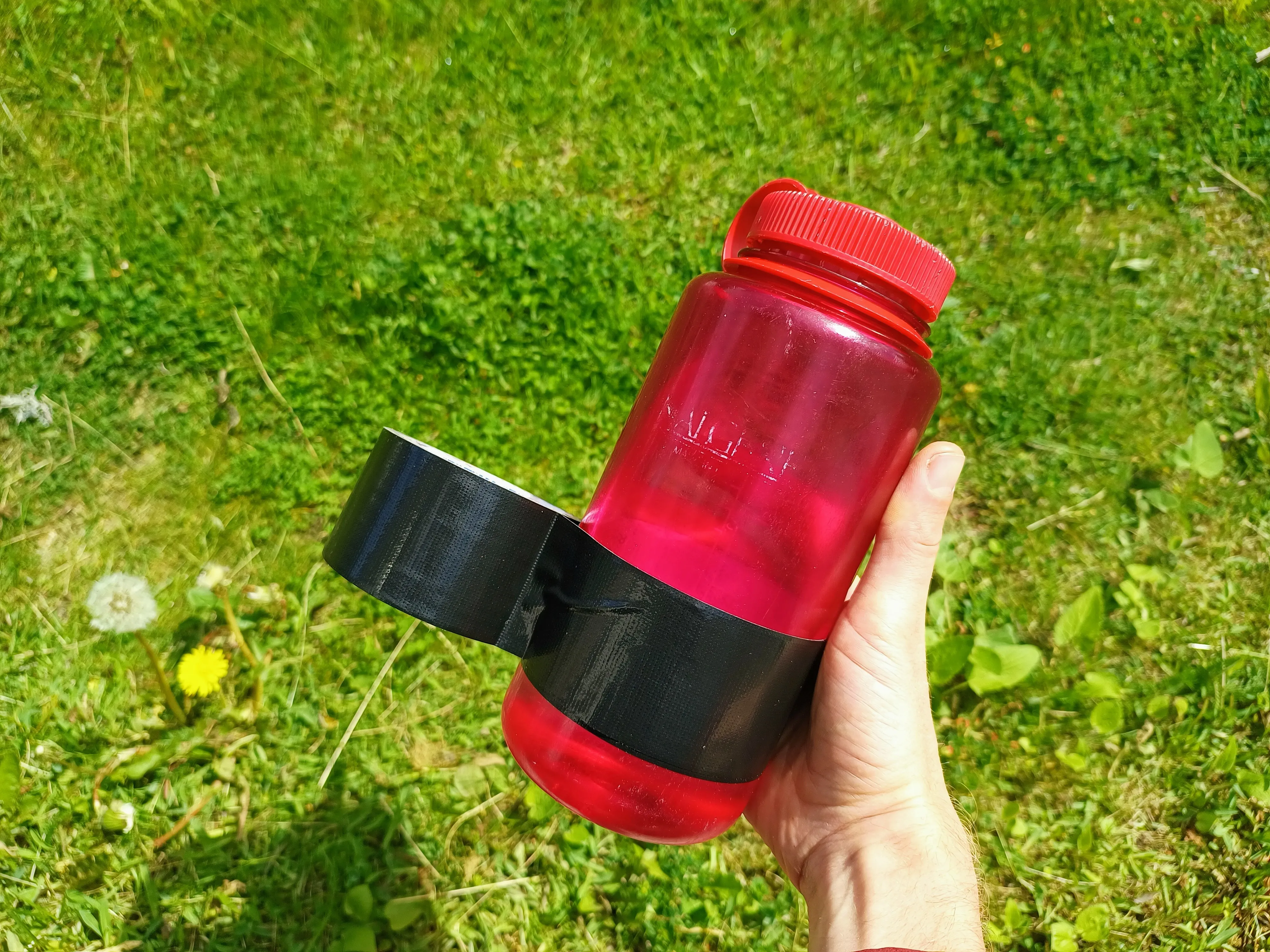
Photo: Lars Peters
«Gaffa» or canvas tape (duct tape)
A roll of tape is one of the most versatile repair tools you can bring. You can make temporary patches over holes and tears in textiles such as shell clothing and tents, as well as things made of hard material. Tape also has a wide range of uses when it comes to first aid on a trip.
Be aware that there are two types of tape:
-
Gaffer tape – known as gaffatape – was developed to fasten cables on stage during concerts.
- Has weaker adhesive so as not to leave so much glue residue on the stage.
- Not so tightly woven, so it is easier to tear off the roll.
-
Canvas tape – also called duct tape – developed and used to fix ‘just about anything’ in the army during the Second World War.
- Stronger in both adhesive and weave than gaffer tape, but can leave glue residue.
-
More on the two types of tape and the confusion of terms:
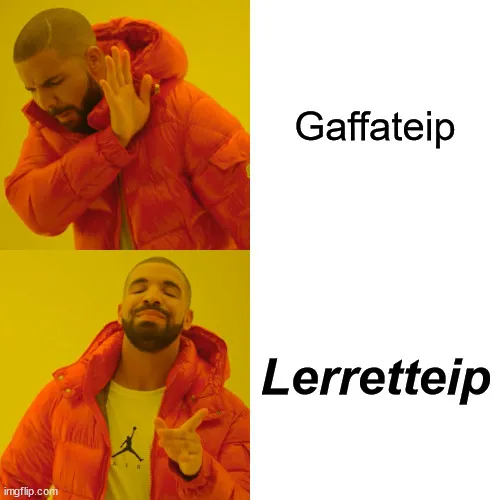
Meme: Drake knows his stuff — canvas tape is what counts on a trip! Illustration: Lars Peters, via imgflip.com
- **Gaffer tape/Gaffateip** – a tape developed for the film and music industry. ‘Gaffer’ is the English name for a lighting chief on a film set, and in everyday Norwegian speech this became ‘gaffa’. The tape is meant for hiding/sticking down power cables on the ground without leaving marks when the tape is removed again. The adhesive is weaker to avoid glue residue on whatever you have fastened the tape to, and the tape is less tightly woven, so that it is easier to tear off pieces for those who work with laying out cables.
- **Canvas tape – d**ucktape/duct tape in English. The word duck comes from the Dutch word ‘doek’, which means cotton weave. It was largely developed and became widely known as the ‘everything’-repairing product through its use in the army during the Second World War. Canvas tape is stronger in both adhesive and weave than gaffer tape, but can leave glue residue.
Full forvirring i tape-leiren: Det er på tide å bringe inn fakta!
A small note: Although the tape is excellent as a quick fix for problems on a trip, the chemicals in the adhesive are so strong that over time they will dissolve most textiles. So always remove the tape and glue residue when you get home. Replace with glue/patches suited to textiles, or repair using a sewing machine or needle and thread.
The density of fibre in the weave, together with the number of times the adhesive has been sprayed onto the weave, makes a big difference to how strong canvas tape is and how effectively it sticks. Here it can be wise to avoid the cheapest tape and spend a few extra kroner. In particular, an extra layer of adhesive, which costs a lot in the production of the tape, makes the difference between whether it holds well on a damp, cold surface or not at all. Try out the tape at home and test it on various plastic, metal and textile surfaces outdoors before the trip.
A spare piece of rope
Along with canvas tape, rope is perhaps the most important tool we can bring for repairs. Rope requires a little more knowledge and insight, but you can make an incredible number of temporary repairs or practical solutions once you know a couple of knots.
4-millimetre rope is a practical diameter to bring as spare or repair rope. Climbing rope or parachute cord is well suited, as at 4 millimetres or more they are strong enough to hold body weight. Then they can be used for most things, everything from guy lines and hanging up hammocks to replacing your shoelaces.
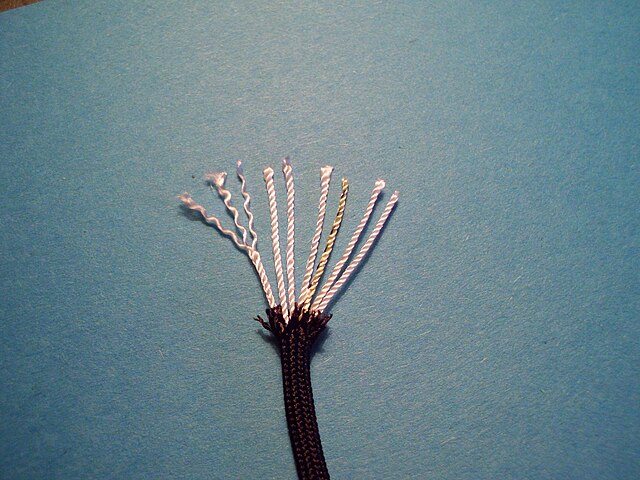
These ropes are easy to recognise: if the rope has a core of white thread in the middle and a woven sleeve of nylon thread on the outside, it is the strong type. It is the white threads that give the rope its strength; the sleeve around it is there to protect the core.
Parachute cord with core thread. Photo: Rawkhopper, via wikimedia commons
A link to an overview of knots, their uses and guidance on how to tie them.
Cable ties
Two to four of them, especially slightly wide ones – more than 1 centimetre – are handy for all sorts of things. When they have a little width, you can use them together with canvas tape to splint ski poles and tent poles. Some cable ties become very brittle after a while, so check from time to time that they do not snap when you press them a little flat with your hand.
Cable ties. Photo: Tomasz Sienicki, via Wikimedia Commons
.JPG/640px-Opaski_zaciskowe_-_kabelstrips_3_(ubt).JPG)
Lighter
Handy to bring for singeing the ends of ropes and for keeping rope or textiles from fraying. Also good for lighting a windproof trekking stove (stormkjøkken). It fits nicely alongside the repair kit that is always in the pack.
Ski straps (winter)
Bring the ski straps on the trip! They are incredibly practical if you have problems with your skins, whether the glue comes loose or the attachment is damaged. You can also use the ski straps around the skis just under the binding to get extra grip if you have slippery skis. If you find a twig from a conifer and fasten it with the strap under the skis, you get even better grip.
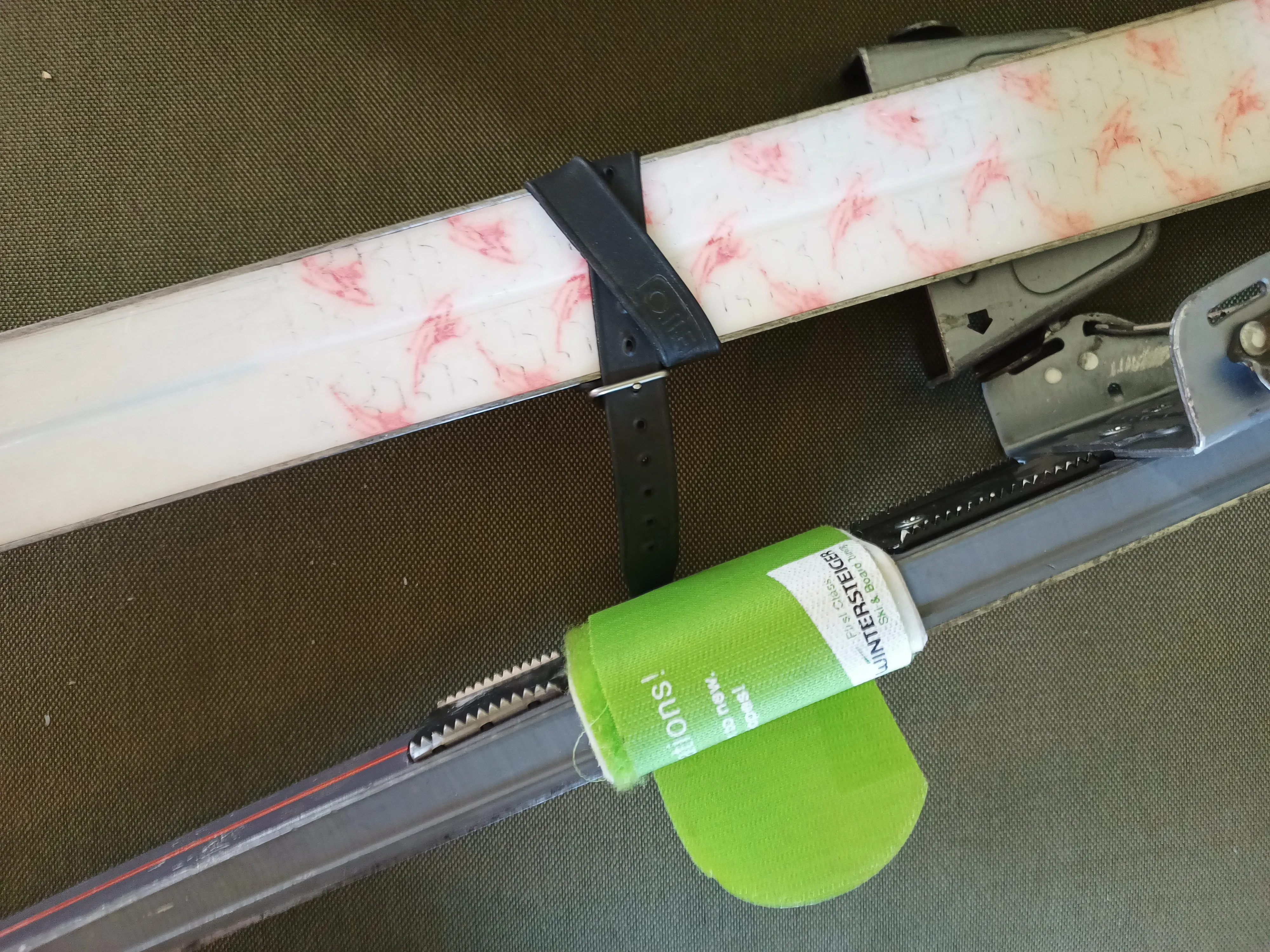
Photo: Lars Peters
Shared equipment
Multi-tool
A multi-tool is a small hand tool that is often primarily an outdoor knife and pliers, but can have an incredible number of additional functions.
A small pair of scissors, a file, a tin opener, a screwdriver and other functions are folded into the handle. The ones with a large gripping plier at the front are especially good. The pliers are practical on many different occasions. A multi-tool is a solid lump of metal and weighs a fair bit, but it is handy for one or two in the group to carry one, since it is a bit much to lug around.
Multi-tool with bit holder. Photo: Santeri Viinamäki, via Wikimedia Commons
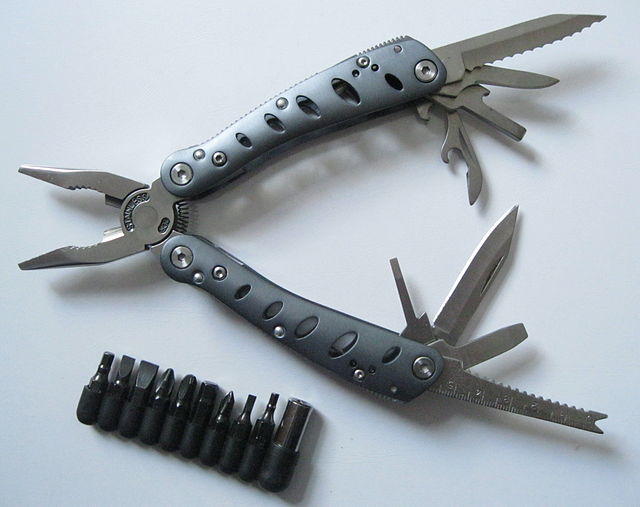
Especially for winter trips with skis: The multi-tools that have a screwdriver where you can swap out the bits are incredibly handy. Bring bits with a slot that fits the ski bindings. Then you can tighten loose screws on the ski or refit/move the whole binding if you or others in the group have snapped a ski. That gives us a mini-ski to finish the trip on.
Repair sleeve for tent poles
If you bring a tent, it is wise to have a repair sleeve that fits the tent poles. It is a metal sleeve about 10–15 cm long that you can slide over a snapped tent pole. Such a sleeve often comes with the tent poles on new tents. One sleeve per tent is recommended.
Avoid keeping the repair sleeve loose in the bag with tent pegs or tent poles. It can disappear quickly when the bags are emptied, or be left behind on winter trips if it lies together with tent pegs for summer use.
Snapped tent pole - on the trip
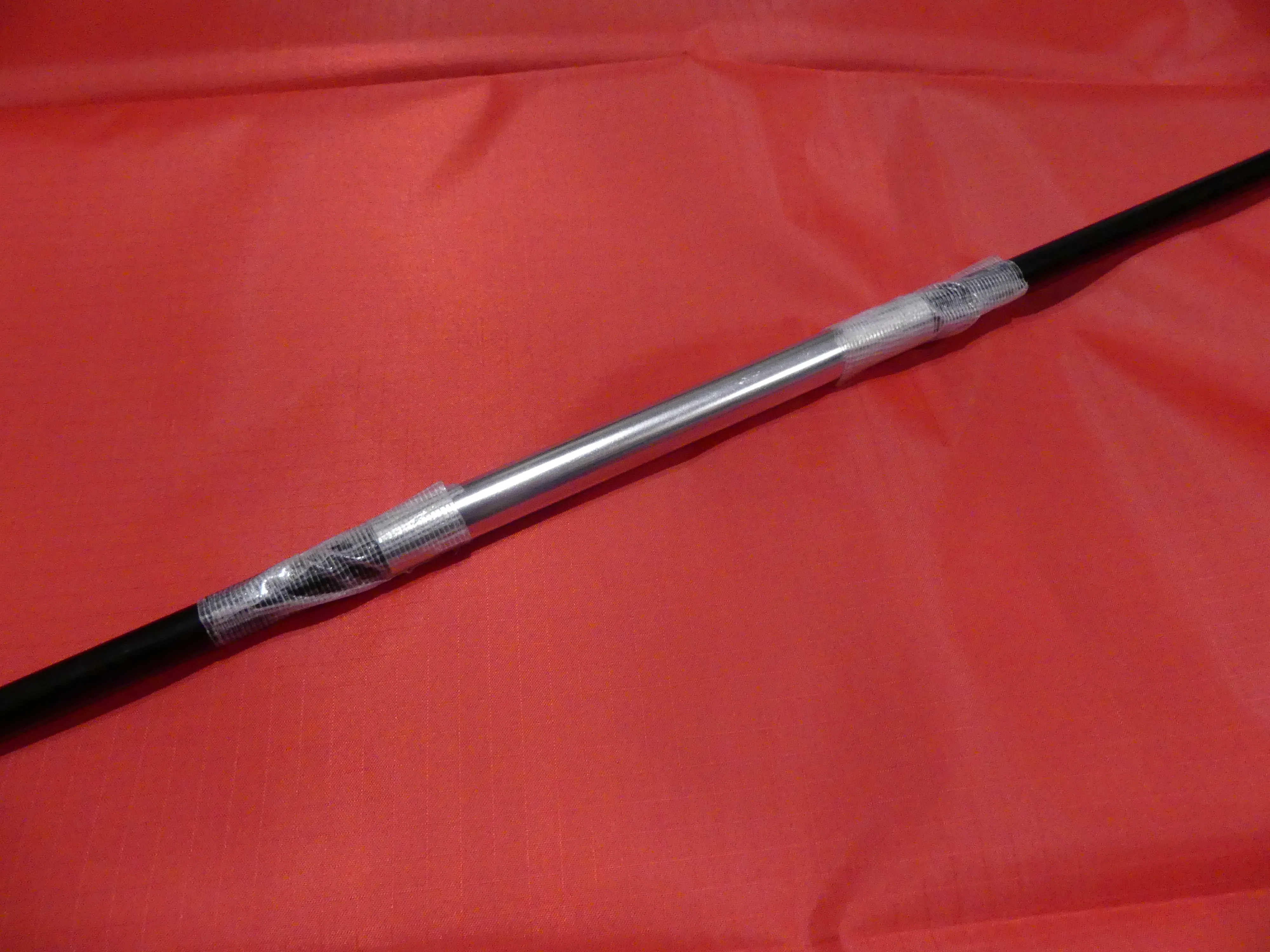
Photo: Lars Peters
Needle and thread
It can be wise to bring a needle and thread. On tents that are silicone-impregnated, even canvas tape can struggle to stick.
Hand-sewing with needle and thread can sometimes be the only solution for repairing a large tear in such tents on a trip. Besides tents, straps on packs, socks and woollen base layers are also equipment where tape does not work.
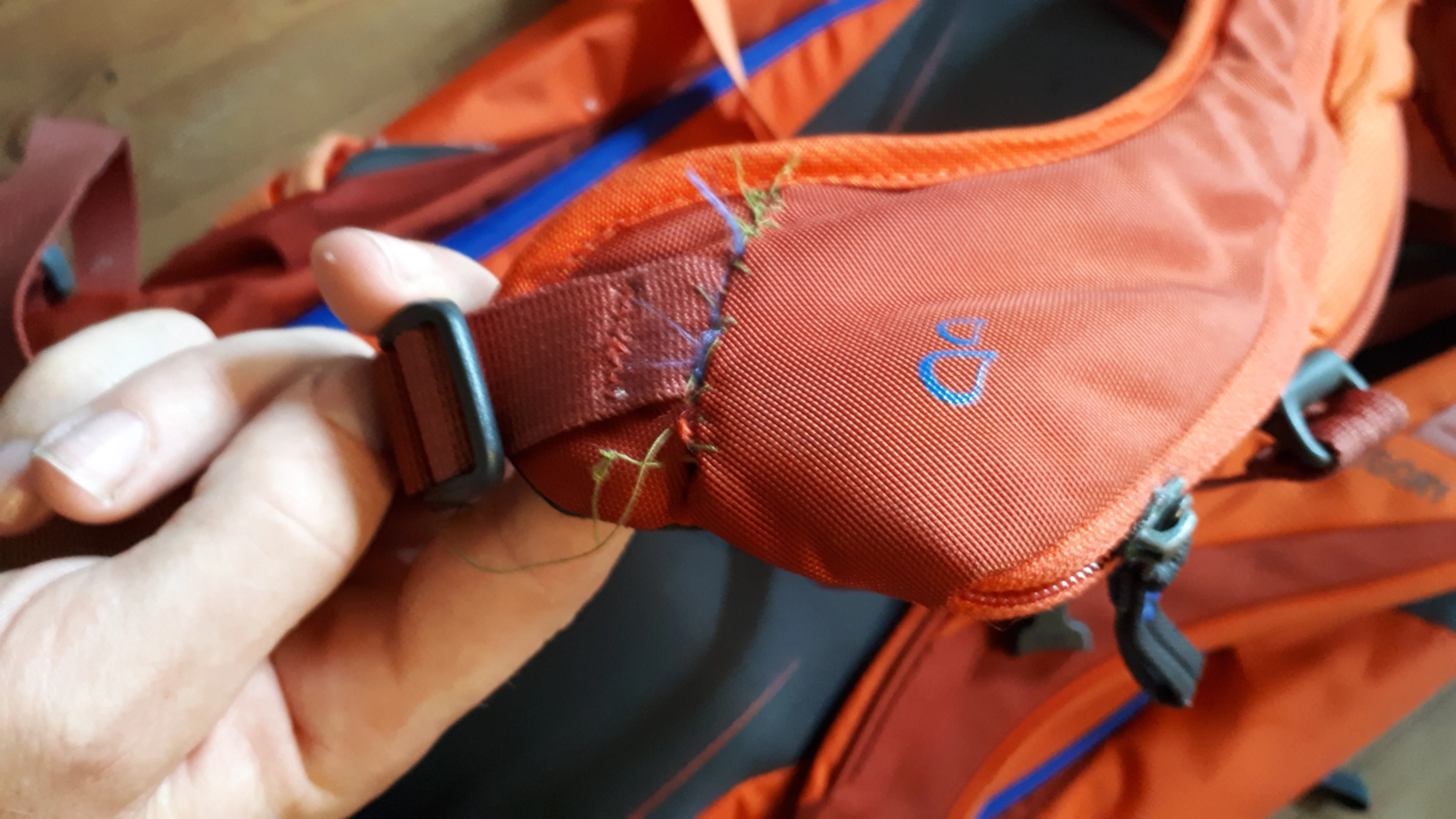
Photo: Lars Peters
Strong sewing thread is important when sewing by hand. There are fewer stitches than a sewing machine would make, so more strain on the thread. Bring a small reel marked extra strong, preferably polyester thread or ‘bonded nylon’, which is used on interiors and sails.
A curved needle in addition to an ordinary straight needle is handy. You can slip it under things that have a hard plate behind that the needle cannot get through. With a curved needle you also sew twice as fast as with a normal needle, since you sew both the top side and out the back of the fabric in one movement.
Handy when you cannot get through with an ordinary needle on, for example, a hip belt or shoulder strap on the rucksack where there is hard material behind.
Curved needle. Photo: Za, Za, CC BY-SA 3.0, via Wikimedia Commons

Tips for sewing with needle and thread
Repairing a hole in clothing by hand.
Repairing a hole in clothing by hand.
**Slik syr du med nål og tråd** (Sømsenteret).
Wire
Now and then wire comes in handy. If you need to make a small hook or ring, steel wire is best. Heavy steel wire is the best, about 1.5–2 millimetres. Then it is strong enough to take a little strain and still easy to bend. A metre is often enough to bring. If you also have good cable ties and rope in the pack, you can improvise most things.
Wire. Photo: Mauro Cateb, CC BY-SA 4.0, via Wikimedia Commons

Spare screws for ski bindings (winter)
On a winter trip it is wise to bring a couple of spare screws for ski bindings, as now and then a screw on the ski binding comes loose and disappears. Also remember a multi-tool with the right bit or a screwdriver that fits the screws.
Loose screws on the trip? Put a tiny piece of canvas tape in the hole in the ski before you put the screws back in. It provides grip and ensures that the screw does not work itself out. Steel wool is even better for this purpose. Now and then you find it in the kitchen at DNT cabins. There it is used for scrubbing pots after cooking.
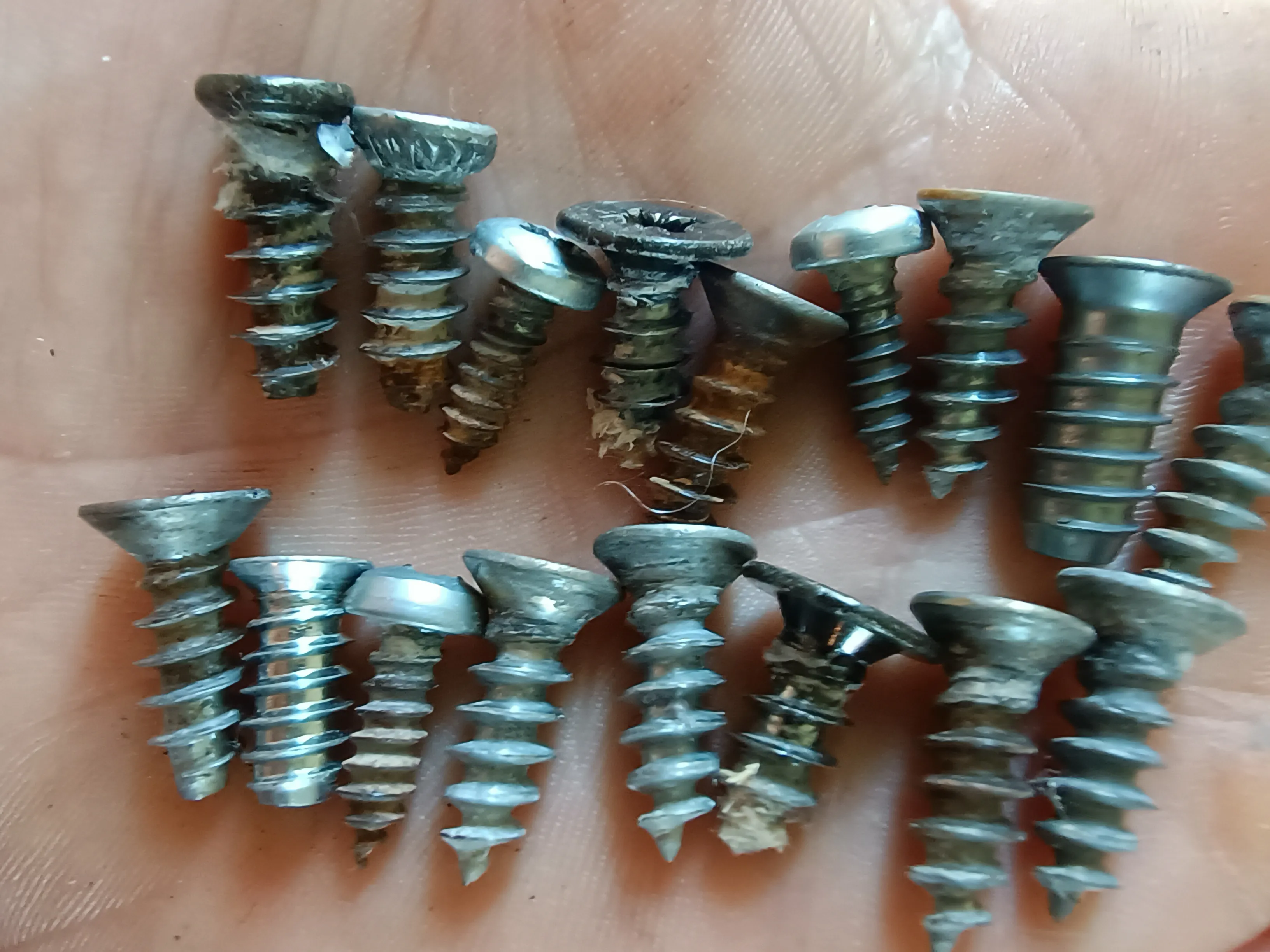
Photo: Lars Peters
Overview of repairs on the trip
Below are shown various repairs you can make on the trip. With simple measures you can repair or make a temporary solution that works until you get home.
Untitled
Next steps
- Repairs after the trip — more extensive repairs at home
- Maintenance of outdoor equipment — prevention — the best saving
- More about repair and maintenance — extended background
- Repair — the hub
More about the topic
- Bra Reparasjon i Telemark — Lars Peters’ workshop
- DNT — sewing and repair courses — courses locally
- Klepp & Tobiasson — Lettkledd — sustainability and lifespan