Repair & Maintenance
Tears and holes in lined clothing
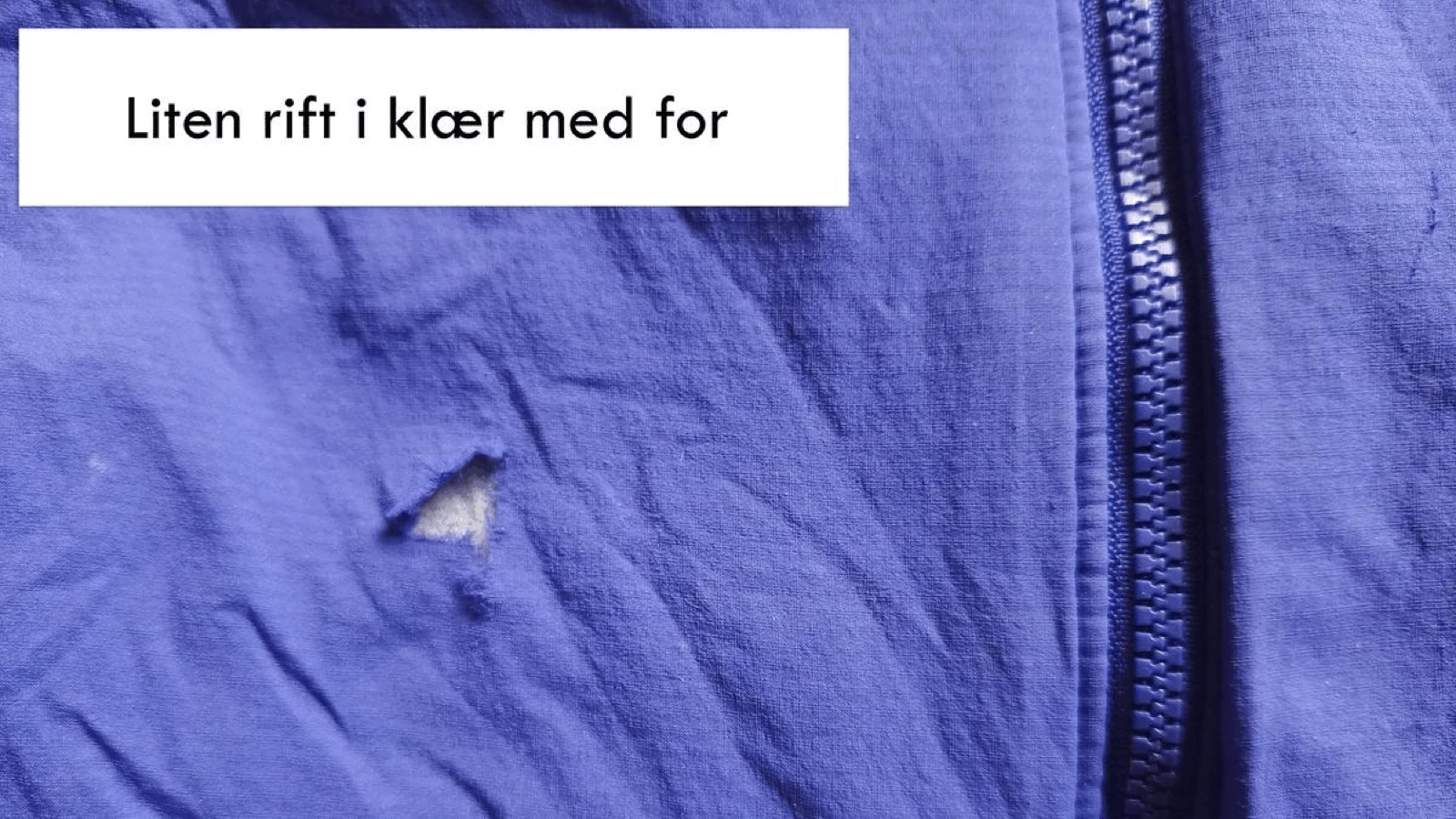
Varmevinyl (heat-bonding web) plus a fabric patch is the quickest repair for lined clothing. Here is how to do it for small and large tears — and why you should use rounded edges.
For lined clothing (winter jackets, down jackets, lined trousers) varmevinyl (heat-bonding web) is the simplest repair. It bonds to all fabric types, is waterproof, and the result looks tidy. The garment can be machine-washed after the repair.
Classic products: Vlieseline, Vliesofix, Bondaweb — double-sided varmevinyl that is activated at 125–175 °C.
Materials
- Varmevinyl — available from a haberdashery, ~100–200 kr per pack
- Fabric patch — can be cut from an old garment you no longer use
- Iron or ski-waxing iron
- Cotton towel as protection between the iron and the patch
Large tears or holes
- Clean the area — scrub with a cloth to remove grease and dirt
- Cut the patches:
- First cut both the varmevinyl and the fabric into a square, one on top of the other
- Then cut into a round shape — rounded edges spread the load and hold better than sharp corners
- The vinyl can be ~1 cm larger than the fabric patch for better edge bonding
- Place the patches over the tear:
- First the varmevinyl
- Then the fabric patch on top
- Remember to remove the protective film from the varmevinyl first
- Apply heat and pressure:
- 125–175 °C — check the manufacturer’s instructions
- Always a clean cotton towel between the iron and the patch — it protects, and absorbs adhesive residue
- A ski-waxing iron is ideal because you can adjust the temperature precisely
- Press lightly while you apply heat for 15–30 seconds
Small or clean tears
If the tear is clean (no fabric is missing, it is just split):
- Place the varmevinyl patch on the inside of the garment
- Bring the fabric around the tear together on the outside of the varmevinyl patch, the edges meeting
- Apply heat — the tear holds together, and the result is much less visible than a patch on the outside
This is the greatest advantage of varmevinyl: it does not bond until you apply heat, so you can adjust the position before you seal it.
The fabric patch
You can take the patch from:
- An old garment that would otherwise be thrown away
- Fabric scraps from old repairs
- A haberdashery if you want a matching colour
Varmevinyl bonds to most things — cotton, wool, synthetics, blends.
Machine washing
The garment can be machine-washed after the repair. The vinyl is activated at 125–175 °C — a normal wash temperature (30–60 °C) is far below the activation point.
Reversible
Varmevinyl can be released again by applying heat. That means you can:
- Remove an old patch and swap it for a new one
- Adjust the position if you placed the patch wrongly
- Apply more adhesive under a partly released edge
Back to Repair → · Sew holes and tears → · Gluing holes and tears in outdoor gear → · Tear in the crotch of trousers →
Text: Lars Peters and Snuitide (2022), revised 2026.