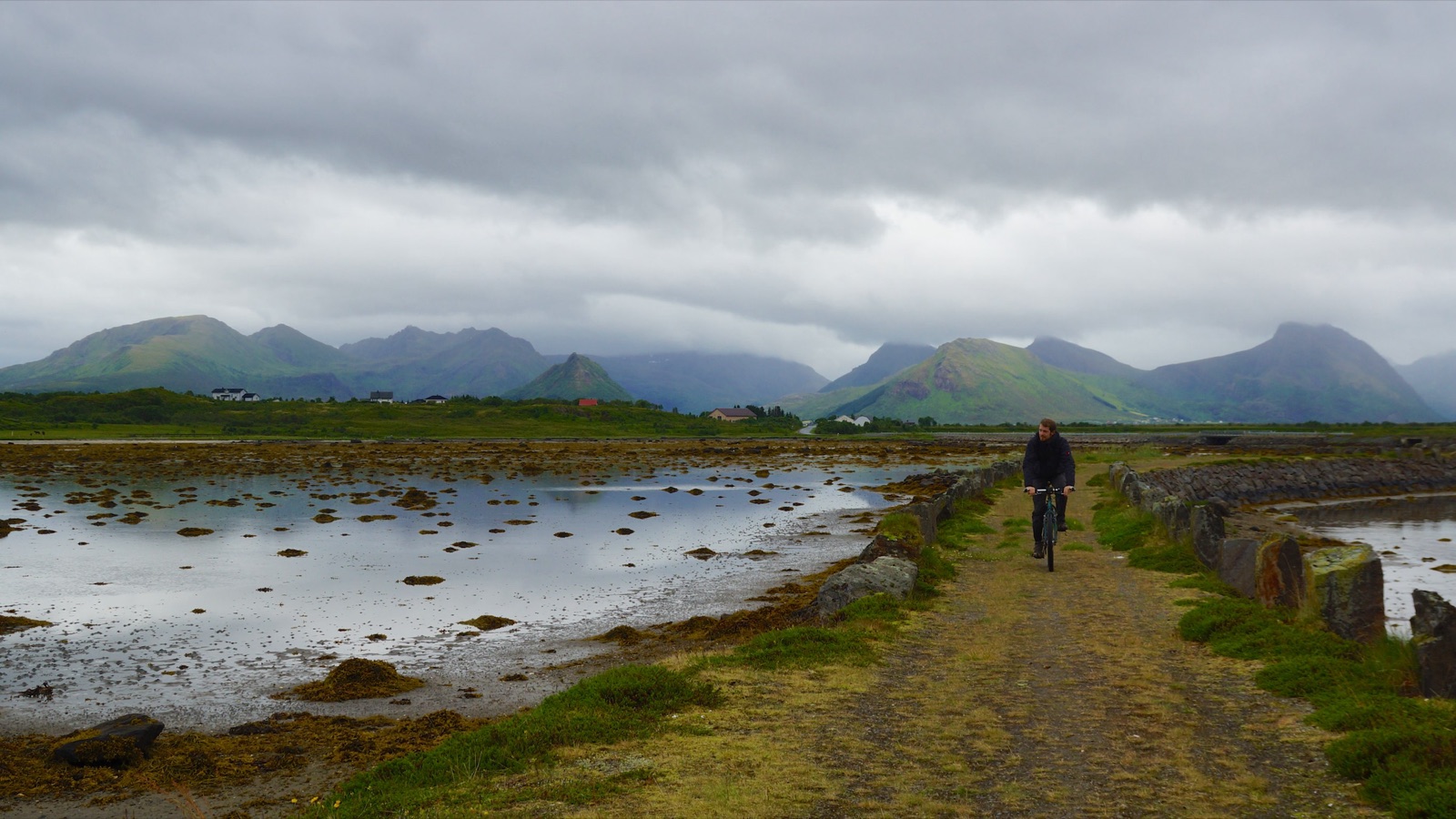
Cycling as an outdoor pursuit has changed dramatically over the past twenty years. It used to be mainly transport or road racing. Today it is one of the fastest-growing branches of Norwegian friluftsliv, driven by specialised variants that did not exist a generation ago — mountain biking, gravel, bikepacking, fat-bike, downhill — and by new routes that have opened the Norwegian terrain in ways the construction workers on the Bergen Line could not have foreseen in 1909.
The organisational foundations go back further. Christiania Velociped-Klub was founded on 9 January 1882 by the brothers Hans and Kristofer Berg together with L.B. Gyldenskog, and Trondhjems Velocipedklub, dating from 1885, is Norway’s oldest still-existing cycling club. Norges Cykleforbund (NCF) was founded on 26 October 1910 and today has around 40,000 members across 375 clubs. Syklistforeningen (formerly Syklistenes Landsforening), founded on 16 June 1947, has around 5,000 members in 17 local branches and works primarily for cycling as transport and infrastructure.
What has happened over the past twenty years is an expansion of the field of activity, not a change in its core. Cycling is still cycling — there are simply more ways to do it than before, and terrain that used to be walking territory is now also cycling territory. That creates both opportunities and tensions, and some of them are still developing.
The sub-disciplines
Norwegian cycling as an outdoor pursuit covers six distinct activities with different equipment and threshold levels:
Mountain biking (MTB) is the classic trail riding in forest, open country and mountains. Hardtail (front-fork suspension only) or full suspension (frame and fork suspension), wide knobbly tyres, geometry that takes drops and jolts. According to SNL, mountain biking had its breakthrough in Norway in the mid-1980s, was organised within NCF in 1991, and got a national championship the same year. At international level there has been a World Cup since 1991 and it became an Olympic event in 1996. Bymarka in Trondheim, Nordmarka in Oslo, Hafjell and Trysil are the established meccas.
Gravel is newer and still in the process of defining itself. Wider tyres than road (32–50 mm), drop bars, a light frame — built for a mix of tarmac, gravel and gentle trail. A blurred boundary towards both MTB and road. The growth segment of the past five to ten years, particularly as a long-distance touring bike.
Bikepacking is a multi-day cycling trip with a packing system on the frame instead of traditional luggage racks and panniers. The classic four-point system: a frame bag in the main triangle, a handlebar bag at the front, a saddle bag at the rear, and a top-tube bag for small items. The discipline developed internationally from around 2007, when manufacturers such as Revelate Designs in Alaska began making specialised bags for ultra-racing cyclists, and reached Norway anecdotally around 2014–2016. Today Mjølkevegen and Rallarvegen have become internationally recognised bikepacking routes.
Cycle tourism means established routes between cabins, campsites or hostels — family-friendly, with more infrastructure and a lower threshold for equipment. Statens vegvesen (the Norwegian Public Roads Administration) operates nine national cycle routes (a tenth route, Lindesnes–Nordkapp, is reserved), which touch fourteen of the eighteen National Tourist Routes. The Pilegrimsleden Gudbrandsdalsleden pilgrim route by bike — 632 km from Oslo to Trondheim over seven recommended stages — is the longest established route within Norway’s borders.
Downhill and enduro in purpose-built bike parks are a category of their own. Hafjell Bike Park has 19 trails over a total of 25 km with 700 metres of vertical drop, open June–September. Trysil Bike Arena has 15 flow trails over more than 22 km, and Geilo Bike Park has its ‘Flow Motion’ on a 4 km blue trail. It requires protection — a full-face helmet, knee and elbow guards, often a back protector — and is structurally more an alpine sport than friluftsliv.
Fat-bike is a bike with oversized tyres of 3–5 inches, intended for snow, sand and bog. It boomed in Norway around 2013 when XXL and Gresvig (G-Sport, Intersport) made fatbikes available at a lower price. It has gone from curiosity to an established winter activity, particularly in Northern Norway and in mountain towns such as Sjusjøen and Beitostølen.
Roots and the present situation
Modern cycling infrastructure in Norway was built in two main periods. The first ran from the 1880s to around 1930, when the towns gained velocipede clubs, the first bicycle factories were established, and cycling was organised as a sport. The second runs from the 1990s to the present, when specialised bikes — first MTB, then gravel, bikepacking and fat-bike — have created new uses.
Birkebeinerrittet is a good indicator of the cycling community’s development. First held in 1993 with 1,327 participants over the 80–82 km from Rena to Lillehammer. The peak years of 2009–2012 had more than 18,000 entrants. It is still the country’s largest mass ride and is on its way to becoming one of the classics of Norwegian sporting culture, on a par with Birkebeinerrennet (cross-country skiing) and Birkebeinerløpet.
Classic road-cycling interest has also grown. Tour of Norway, started in 2011 as the successor to Ringerike GP, arose on the wave that Thor Hushovd and Edvald Boasson Hagen created when Norway suddenly had world-class cyclists in the 2000s.
For the ordinary cyclist, the most important development of the past five to ten years has been the growth of the e-bike. Norway has more than 500,000 e-bikes in 2025, up from around 180,000 in 2019, according to industry estimates. Annual e-bike sales run at 70,000–85,000. The e-bike has changed who cycles, where they cycle, and how far they get. It also creates friction — particularly around use in utmark, where the right to roam does not automatically cover the e-bike.
Classic Norwegian routes
Norwegian cyclists have built out a network of classic routes over the past twenty years. Some are old construction roads given new life; others are deliberately designed as cycle-friendly multi-day trips:
Rallarvegen is the classic of all classics. Laid out as a construction road during the building of the Bergen Line, it opened for cycling in the summer of 1974. 80–82 km from Haugastøl across Hardangervidda via Finse, through Hallingskeid and Myrdal to Flåm. Today around 25,000 cyclists pass through each year — from a few hundred in the beginning to one of Norway’s most used cycle routes over a summer. It requires no specialised equipment, but does require fitness and a little time.
Mjølkevegen runs for 250 km between Vinstra in Gudbrandsdalen and Gol in Hallingdal, with a southern route of around 100 km and a northern route of around 200 km. Typically 4–10 days. A gravel/bikepacking classic that Bikepacking.com has highlighted in its international route collection.
Pilegrimsleden Gudbrandsdalsleden is 632 km from Oslo to Trondheim over seven recommended stages, with an eastern route and a western route between Oslo and Lillehammer. The recommended cycling period is 1 June to 1 September. It has a longer tradition than most Norwegian cycle routes — the path follows the medieval pilgrim road and uses the existing infrastructure of hostels and lodgings.
EuroVelo 12 The North Sea Cycle Route is 7,250 km in total around the North Sea, of which 1,130 km run in Norway from Svinesund to Bergen. Opened in 2001 and entered in the Guinness Book of Records in 2003 as the world’s longest signposted cycle route.
Aurlandsfjellet (Snøvegen) and Gamle Strynefjellsvegen are two classic National Tourist Route stretches that have become cycle-friendly institutions. Snøvegen is 48 km between Aurland and Lærdal with a high point of 1,306 m a.s.l. and more than 1,000 metres of ascent from the fjord. Strynefjellsvegen is 27 km from Grotli to Videsæter, open from 15 June to late September.
Lofoten along the E10 — around 160 km Fiskebøl–Å with daily stages of 20–60 km, almost all tarmac with around 20 km of gravel — has become an internationally popular cycle-tourism destination. Dramatic landscape, short distance, easily accessible.
For anyone who wants the full picture, Statens vegvesen’s national cycle routes (vegvesen.no) and Komoot collections are good starting points.
Where people actually cycle
The daily mountain biking in Norway happens in the bymarkene (the town forests). The Trailforks database records 355 trails in the Oslo region and is a good indicator of where MTB activity is concentrated. Bymarka in Trondheim has a local MTB culture documented from the early 1990s, and Nilsbyen Terrengsykkelpark, completed in the summer of 2020 by Trondhjem Velocipedklub (TVK), has made local trail access more formalised. Voss, Geilo, Hovden and Hafjell are other established centres.
The town forests are where the everyday outing lives — the short afternoon loop after work, the weekend trip in familiar terrain, the club rides. For many cyclists this is where time in the saddle actually accumulates. Longer mountain trips and bikepacking experiments are something that happens five to ten times a year; the town forest is something that happens weekly.
For longer trips, the mountain and fjord-side areas dominate. Hardangervidda for long-distance touring, Sognefjorden and Hardangerfjorden for fjord cycling, Sunnmøre for a combination of fjord and mountain, and Lyngen and Lofoten in the north for dramatic landscape. The enduro and downhill community is concentrated around Hafjell, Trysil and Geilo.
Safety — falls are the main risk
The dominant risk in cycling is falling. Single-vehicle accidents — where no one else is involved — make up 3 in 4 cycling accidents in Norway. Traffic accidents are the other main category. The statistics are mixed: around 2,000 registered injuries in 2019, but TØI estimates that the actual number is close to 4,500 annually because of substantial under-reporting. 3–4 deaths in cycling accidents per year according to the National Trauma Registry.
For mountain biking and steep trail, collisions with the terrain — not with others — are the classic source of injury. Injuries are typically to skin, bones and head. The helmet is the single measure with the greatest preventive effect: TØI estimates that compulsory helmet use would prevent 440–1,000 head injuries annually. Helmet use has increased dramatically — adult cyclists in Norway went from 34 per cent in 2006 to 70 per cent in 2022 according to Trygg Trafikk. There is still no compulsory helmet law, but 84 per cent of the population supports one.
Practical safety rules:
Helmet always, and full-face for downhill and steep park riding
Braking technique on steep terrain — let the rear wheel do some of the work, do not just brake with the front. Braking technique on steep ground goes through it.
Trail etiquette — give warning when coming up on others, give way to pedestrians on narrow trail
Water crossings — bike and stream are a poor combination, particularly with disc brakes that lose friction when wet
Weather and hazard changes in the mountains, the same as for walking
Bikepacking introduces trip-planning competence: being able to fix mechanical faults, find water, plan daily stages. A puncture 40 km from the nearest road has to be fixed by you. Mechanics on the trip goes through what you actually need to be able to do.
April–May — trails open as the snow melts. The lowlands are clear in April/May.
June–September — the core of the season. Long days, established trails, dry conditions (most often).
October — the colour season, fewer people, still rideable in many places.
November–March — winter. Fat-bike in Nordmarka and a few winter-prepared trails; otherwise very season-dependent.
On average the Norwegian cycling season is around 28 weeks according to a TØI report. It varies between regions — the coast of Southern Norway has the longest season, the mountains the shortest.
Trails can be vulnerable in wet periods — trail erosion is a real challenge. Consider whether a gravel route is better than a soft trail when conditions are marginal.
Ethics, rules and the e-bike debate
The right to roam covers cycling in utmark, but not on all terms. Friluftsloven § 2 (the Outdoor Recreation Act) states that the right to roam gives the right to cycle ‘on road or trail in utmark and everywhere in utmark in the mountains’ — that is, not freely on all trails in the lowlands, but only on prepared trail and road.
An important legal point: the right to roam does not cover e-bikes. The preparatory works for the Outdoor Recreation Act specify that ‘pedal cycle’ does not include a bicycle with an auxiliary motor. A regulation from 2017 opened for e-bikes as an exception to the ban on motorised traffic, but in 2024 NOU 2024:10 on a new motorised-traffic act proposed banning the e-bike on trail in utmark. The proposal was out for consultation until 15 September 2024, and 84 municipalities may lose local authority to regulate the use if the act is passed. This is a field in motion — check the current rules before you plan longer e-bike trips in utmark.
For ordinary mountain biking the ethics are more established, but still developing. A NINA study from 2019, commissioned by Miljødirektoratet (the Norwegian Environment Agency), concluded that it is the amount of use that determines how great the wear becomes, not the type of activity (cycling vs. walking). Wear increases most in wet and steep terrain, and trails become wider with heavy use, particularly on wet sections.
Practical guidelines for trail etiquette:
Give way to those on foot
Do not ride on soft trails (trail damage)
Close gates behind you
Do not ride around grazing animals
Do not chase animals such as elk or deer
Local protected areas may have their own rules — check the management plan before you plan. Many national parks and bird sanctuaries have either a ban or restrictions on cycling.
Next steps
If cycling is new to you as an outdoor pursuit: try an everyday bike on a gravel road or local trail near home before you plan anything ambitious. It is the rhythm and the fitness that build, not the equipment.
If you cycle regularly and want to go further: build out to mountain biking or gravel according to what kind of terrain there is near you. For longer multi-day trips, bikepacking is the natural next step.
For anyone who wants a measurable dimension: rides such as Birkebeinerrittet, Skaala Open and local Birken events are classic goals. Tour de Sigdal, Trondheim Bike Festival and Tour de Hardangervidda are other established events.
If you ride sportives and want to broaden the field of activity: try a bike-park weekend at Hafjell or Trysil to see how downhill actually works.