Gear
Ski wax and scraper
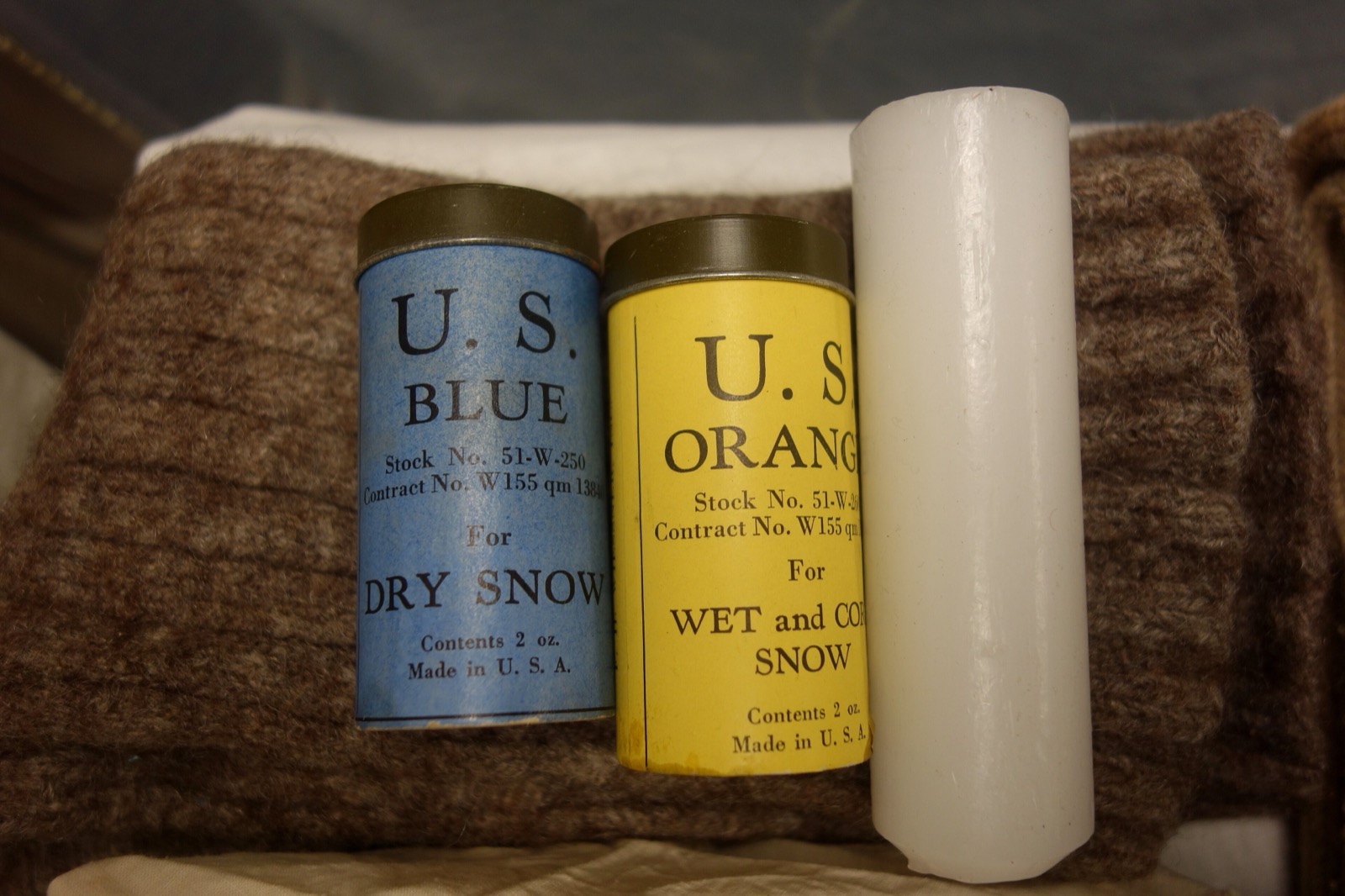
Klister, hard wax, glide wax — which suits which snow, and why you need a scraper either way.
Ski waxing is about giving skis the right friction against the snow — enough grip to move forward, enough glide to travel efficiently. Winter temperatures in Norway range from +5 °C (wet, thawing) to −25 °C (hard mountain snow), and the same wax does not work in all conditions.
For ski tours with climbing skins the problem is solved another way. For classic cross-country skiing and backcountry skis without skins, the waxing is central.
Three main types
Hard wax for dry, cold snow (below −2 °C):
- Blue hard wax — cold snow, −5 to −15 °C
- Purple hard wax — moderately cold, 0 to −5 °C
- Green hard wax — very cold, below −15 °C
Klister for wet or old snow (above 0 °C or transformed):
- Yellow klister — wet fresh snow
- Red klister — wet old snow, “crust snow”
- Silver klister — hard-packed transformed snow
Glide wax for the ski outside the grip zone — applies to skate skis, backcountry skis with a wax zone; for classic cross-country skiing it is wax in the grip zone and glide wax on the rest.
For Norwegian winter trips, blue and purple hard wax + yellow and red klister is the standard “kit” — it covers most situations.
What kind of ski
Grip-zone skis (traditional classic cross-country, backcountry skis without skins): the main difference is how the grip zone is built:
- Wax skis — you apply wax/klister in a hand-marked zone. Requires knowledge but gives the best performance.
- Pattern skis (fish-scale) — have a moulded pattern that works without wax. Lower performance, but no maintenance.
- Skin skis — have permanently fitted mini-skins. A modern compromise, easy to use.
For wax skis the waxing is central. For pattern or skin skis you only need glide wax on the rest of the ski.
Classic manufacturers
Swix (Norwegian-Swedish) — the reference brand. Covers all conditions, a good range.
Holmenkollen and Vauhti — other northern European specialists.
Hertz and Toko — international alternatives.
For a Norwegian start: the Swix VR series is simple and covers the everyday.
Scraper
A scraper (plastic or metal) is for removing old wax or klister before re-waxing, and for cleaning the ski base. It should be in the ski kit.
A classic plastic scraper (Swix, Toko): 50–100 kr, lasts many seasons.
Used for:
- Changing wax type — remove the old before the new
- Thawing snow — klister often has to be removed between trips
- Start of season — old summer impregnation has to come off
Accessories
For serious wax use:
- Waxing iron (waxing flat iron) — for hot-waxing glide wax
- Waxing bench — a fixed surface for waxing work
- Waxing stand — holds the ski steady while you work
These are for home use, not for the trip.
Packing
In a small bag with wax, klister, a scraper, and a small cork block (for rubbing wax in). Weight: 100–200 g in total.
Maintenance
After the season: scrape off all old wax, store the skis dry and hanging. Apply base glide wax for summer storage, which protects the wooden base.
Text: Snuitide (2026), based on Swix’s technical documentation.