Gear
First-aid kit
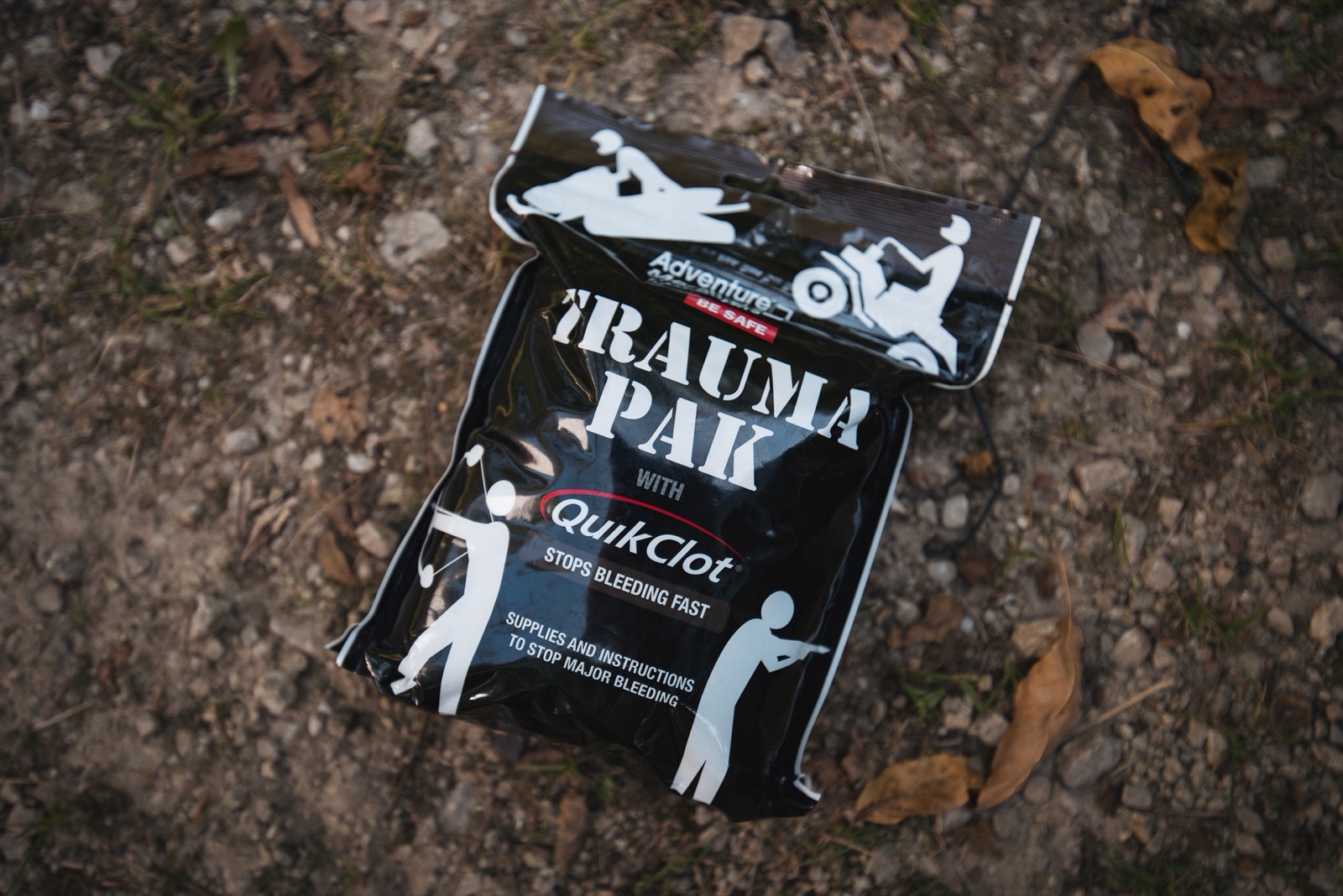
What a packable first-aid kit should actually contain, how it scales between trip size and expedition, and why you should repack the ready-made first-aid kit before you take it along.
First-aid kit on a trip is what you bring because, hopefully, you will not need it. When you do actually need it, it is the difference between a doable trip and an evacuation. For Norwegian outdoor use the main purpose is to handle the ordinary (blisters and chafing, small cuts, fractures, headache, allergy, stomach) and to keep people alive until professional help arrives.
For the use of first aid — the technique itself, the assessments, scenarios — see first aid and especially life-saving first aid. This article is about the kit.
Three levels — match to the trip
Day trip close to home (short walk, familiar area, help available within 1–2 hours):
- 5–10 plasters in various sizes
- A couple of sterile gauze pads
- Sports tape or liquid bandage
- Blister plasters (Compeed or equivalent)
- Ibuprofen or Paracet (painkiller)
- Personal medicines if needed
Volume: matchbox-sized. Weight: 50–100 g.
Ordinary trip (weekend trip, cabin trip, day trip in the mountains):
As above, plus:
- Triangular bandage or dressing for support/stretcher
- Elastic bandage (5 or 8 cm)
- Saline (single-use ampoules for rinsing wounds)
- Tweezers (for splinters, tick bites)
- Emergency tape (5 cm wide, durable)
- Disposable gloves (a pair)
- Antihistamine tablet for allergy
- Small scissors (preferably with a rounded tip)
Volume: palm-sized. Weight: 200–400 g.
Longer trip or expedition (several days, steep terrain, far from help):
As above, plus:
- More comprehensive bandaging
- Vacuum splint (SAM splint) for fractures
- Steri-Strips or skin glue
- Antibacterial ointment
- A larger quantity of painkillers (of several types)
- Anti-diarrhoeal (loperamide)
- Travel first-aid book (short)
- An EpiPen if applicable for those who are allergic
Volume: 1-litre freezer-box-sized. Weight: 500–800 g.
Packing method
In a dry bag with a zip seal (Aloksak or Loksak), so you protect everything from rain and condensation. A clear bag lets you see the contents without opening it.
Red cross / NO red motif on the outside is not necessary at home, but makes the kit quicker for others on a trip to find in a crisis.
Placement in the pack: easy to reach, not at the bottom. Side mesh or top of the main compartment. You should be able to retrieve it with a single movement.
Tape — the most important item
Sports tape (also called strapping tape or kinesio tape) is possibly the single item used most from the first-aid kit. It is used to:
- Tape before blisters form (prevention)
- Hold a plaster or bandage in place
- Stabilise an ankle after a sprain
- Fix a worn piece of cutlery
- Tape together gear that has broken
- Tape together a pack that has broken
Two choices are classics: Leukotape P (strong, sticks well, for firm bandaging) and kinesio tape (elastic, for support without restricting movement). Leukotape P is often the only thing you really need for a trip — strong adhesion, holds in rain, holds for days. Price: ~150 kr per roll, lasts a season.
Gauze pads, plasters and wound closure
Standard plasters in various sizes cover most things. Waterproof types are preferred — ordinary fabric plasters give up in rain or sea spray.
Sterile gauze pads for larger wounds (5x5 cm to 10x10 cm). 4–6 of them are enough for an ordinary trip.
Steri-Strips (thin adhesive strips) for closing small cuts without sutures. Hard to use without practice, but effective on clean cuts.
Skin glue (Dermabond or equivalent) is a modern and simple alternative for clean wound closure. It takes a little practice but gives a better result than Steri-Strips for most.
Bandaging
Elastic bandage (5 or 8 cm wide) for ankle support after a sprain, or for compression over large wounds. Two of them in different widths cover most things.
Triangular bandage is very versatile: a sling for an arm, a head bandage, a sling for support, or a filter for water in an emergency. A classic in first-aid kits, for a reason.
Vacuum splint (SAM splint) is a light, mouldable aluminium strip that can be shaped to stabilise fractures. 10 cm wide and 90 cm long is standard. Weight: 100 g. Worth it for a trip further from help.
Medicines
What you bring is individual, but some classics:
- Ibuprofen (Brufen, Ibux) — anti-inflammatory, painkiller. 200 mg tablets, 10–20 of them.
- Paracetamol (Panodil, Paracet) — pain, fever. 500 mg tablets, 10–20 of them.
- Antihistamine (Telfast, Cetirizin) — allergy, insect bites. 5–10 of them.
- Anti-diarrhoeal (Imodium) — for a trip further from a toilet. 4–6 of them.
Always bring personal medicines — asthma spray, EpiPen, heart medication. Let others on the trip know where they are.
Check the expiry date on all medicines before each longer trip — expired medicines are either less effective or potentially harmful.
Other tools
- Tweezers — for splinters, ticks, small shards of glass
- Scissors — for cutting tape and bandage
- Disposable gloves — two pairs, for hygiene when treating wounds
- Thermometer (digital) — for an expedition or trips with children
- Handkerchief or wet wipes — for cleaning skin
- First-aid book (mini) — as a reference in a crisis
Classic ready-made solutions
Adventure Medical Kits — American, a broad range from ultra-light to expedition.
Lifesystems — British, a good selection for trips and backpacking.
Vandel & Apotekfornyer — Norwegian pharmacies sell good standard kits.
For Norwegian trip conditions: Lifesystems Trek (medium size) is a good starting point that you then repack as needed.
Maintenance
Check the kit before each season. Go through everything, throw out expired medicine, top up what has been used, make sure everything is dry and unsoiled.
After a trip where you used part of the kit — top it up before the next trip. It is easy to forget and then discover a missing plaster at the first blister on the next trip.
First aid on a trip — the category for skills and scenarios.
Text: Snuitide (2026), based on Røde Kors sin førstehjelpsguide for tur, and on recommendations from the Wilderness Medicine Institute.