Repair & Maintenance
Tear in mosquito netting
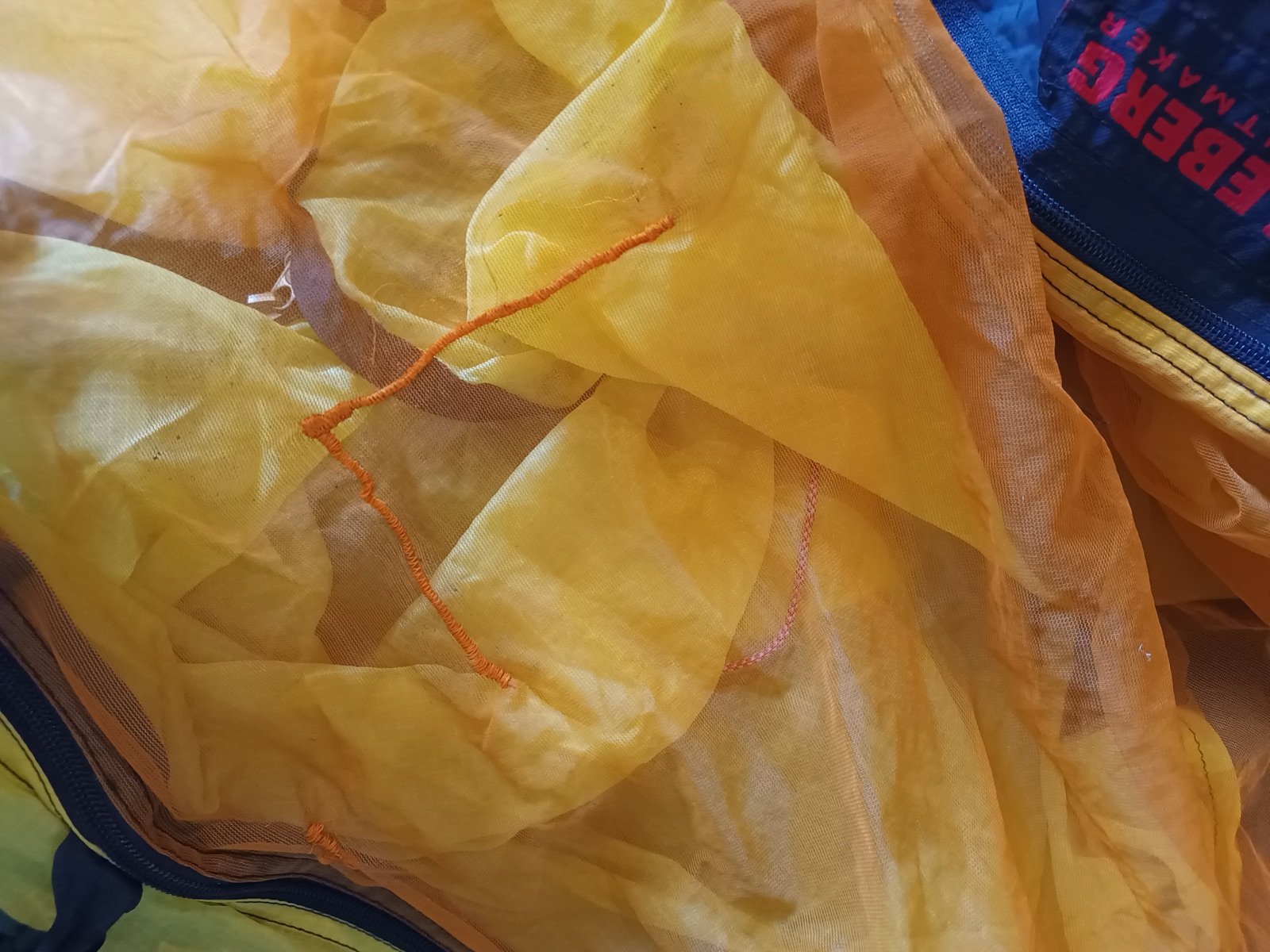
A zigzag stitch run straight over the tear with stitch length 0 closes the hole in mosquito netting. For larger holes: cut a patch and glue it on both sides.
A tear in the mosquito netting on a tent or mesh door is annoying — a single fly or mosquito through the hole is enough to ruin the night. The repair is quick once you have a sewing machine.
Materials
- Sewing machine with a zigzag stitch (can also be done by hand, but a machine is faster and more even)
- Thin thread in a matching colour — ideally polyester
- Pins
How to do it — zigzag stitch straight over
Best for small tears (under 5 cm) where the netting is intact.
- Open the zip and lay the work flat on the sewing table. Don’t let it hang and pull
- Bring the tear together so the sides just overlap. Secure with 1–2 pins
- Set up the sewing machine: straight stitch with zigzag, stitch length 0, width 3–4
- Pull the netting slowly by hand through the sewing machine — don’t use the pedal in auto mode
- Result: an even strip of zigzag thread that seals the tear
- Remove the pins as you sew
Larger holes: glue a patch
If parts of the mosquito netting are missing or damaged:
- Cut a fabric patch slightly larger than the hole — use mosquito mesh (can be bought by the metre) or another light, transparent fabric
- Glue it on both sides of the netting with a heat-bonding patch (varmevinyl) or universal spray adhesive
- If you make the patches the same size on both sides, they hold each other in place via the netting in between
For the glue method: see Gluing holes and tears in outdoor gear for details.
Tips
- A heat-bonding patch gives the best result for a permanent repair — it bonds well and stays invisible
- Spray adhesive works quickly but can come loose over time
- Test the repair before your next trip — especially if you have stuck on a small patch
- For large tears where whole sections are missing: consider replacing the entire mosquito-net panel through the manufacturer’s spare-parts service
Back to Repair → · Gluing holes and tears in outdoor gear → · Tents →
Text: Lars Peters and Snuitide (2022), revised 2026.