Food
Planning trail food
When you are going to cook outdoors you have to plan differently from at home. You cannot pop into the shop if you have forgotten something.
- Contents
When you are going to cook outdoors you have to plan differently from at home. You cannot pop into the shop if you have forgotten something. So think through every meal in detail to be sure you have enough food and the equipment you need to prepare it. Remember too that you will be carrying it on your back or in a pulk.
In brief
- Plan and shop in advance; there are no shops in the mountains
- Fresh food such as meat spoils quickly in warm weather
- Fry the meat in advance and it will keep longer
- Food with a high water content freezes in winter
- Food high in fat withstands more cold before it freezes
- Think about weight and volume when you pack
- Remove unnecessary packaging
- Choose light over heavy, powdered milk over ordinary milk
- Make sure the food provides the nutrition you need
- Take account of allergies among those you are going on the trip with
- Avoid throwing food away
- Plan so that you use everything up
Enkelt friluftsliv - mat på tur
Keeping qualities
In summer the food can spoil or become unappetising because of overly high temperatures before you get round to eating it. Cured meats, dried fish, hard cheeses, carrots, dry foods and tinned goods keep fairly well in above-freezing temperatures. If you are taking meat you should fry it before you set off, as it then keeps longer.
In winter the food can freeze. Food that contains a lot of fat, such as cured sausage and rich cheeses, does not freeze as readily. Food with a high water content, which freezes easily, should be packed so that it can be thawed and prepared directly in a pot of hot water (Henjum, 2016).
Storing food
Pack the food well to keep out unwanted guests such as animals and insects. It is also possible to hoist the food up into a tree. Store the food in the shade. Fresh food that normally lives in the fridge, such as meat, fish, dairy products and sandwich fillings, should be kept cold. Look for a stream or a bog, or dig a hole in the ground and put the food in it. Remember to pack the food well first.
If you have snow available near the camp, bury the food in the snow.
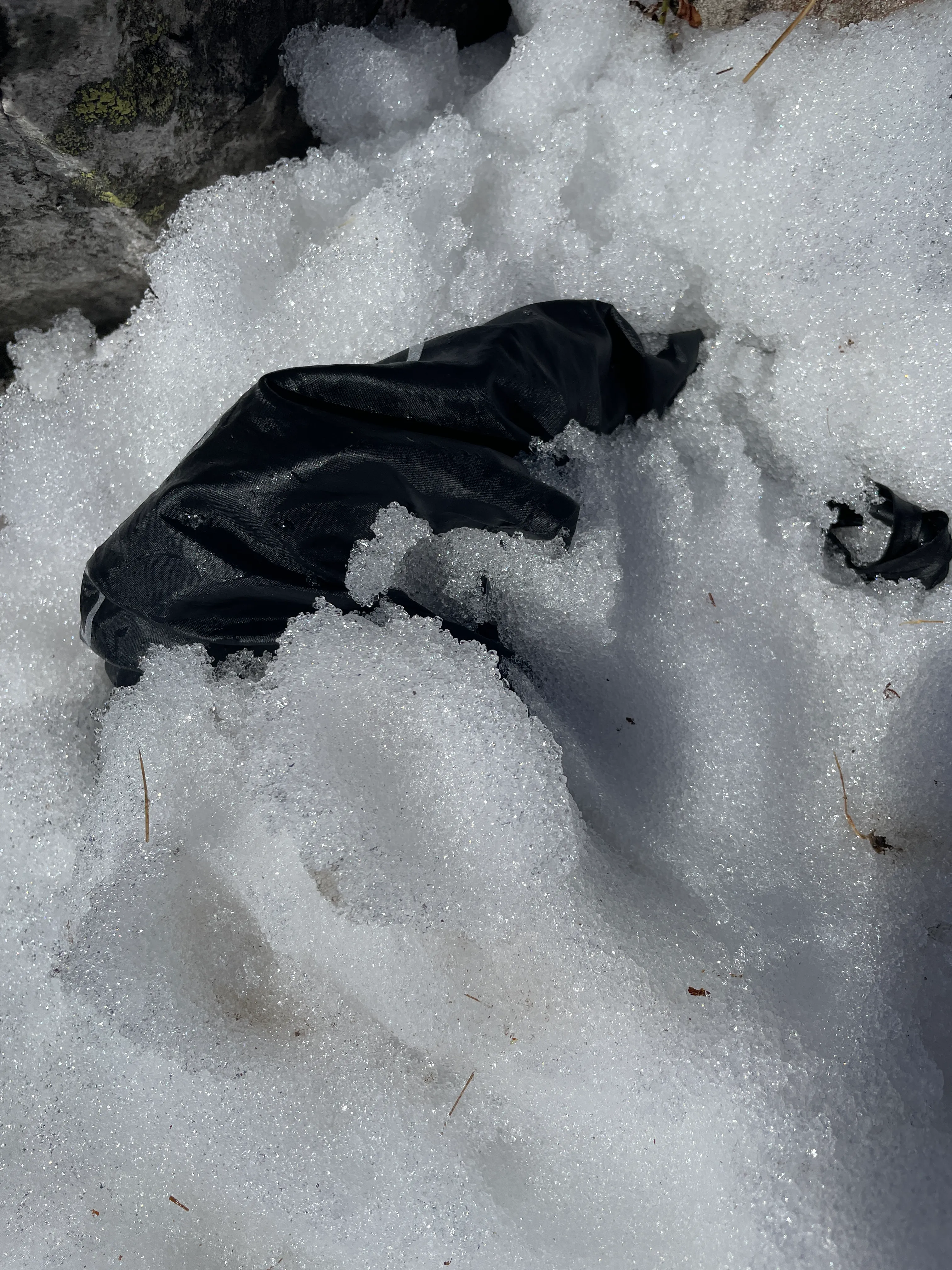
Photo: Gina Wigestrand
Weight
It is important to think about weight when we are going to carry the food with us. How is the food packaged? Can you remove packaging? If you are taking tinned tomatoes it is smarter to choose the ones in a carton rather than in a tin. Or perhaps you can use sun-dried tomatoes instead? Milk and cream can be replaced with powdered milk. Crispbread and polar bread are lighter than ordinary bread, and keep better.
Preparation (cutting, frying, removing packaging)
Some foods can be worth cutting, or frying, at home before the trip. Hard vegetables such as carrot and celeriac can be cut at home, while onion and garlic keep best whole. A fair amount of the food we buy in the shop is wrapped in plastic and cardboard. Remove as much of the packaging as possible and take just what you need for the trip.
It is also possible to dry much of the food you are going to take on the trip. That way you save a lot of weight. You can dry the food in the oven on a low heat with the oven door open.
Dry your own trail food
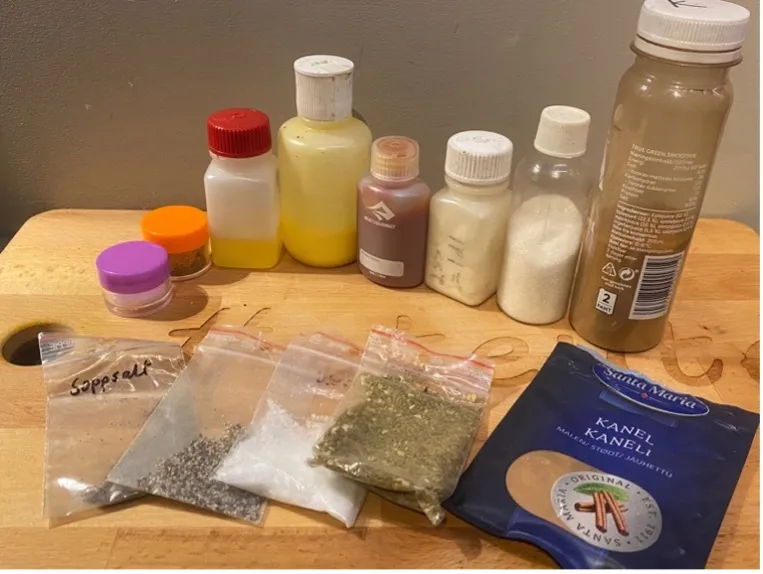
Photo: Hilde Grøtte
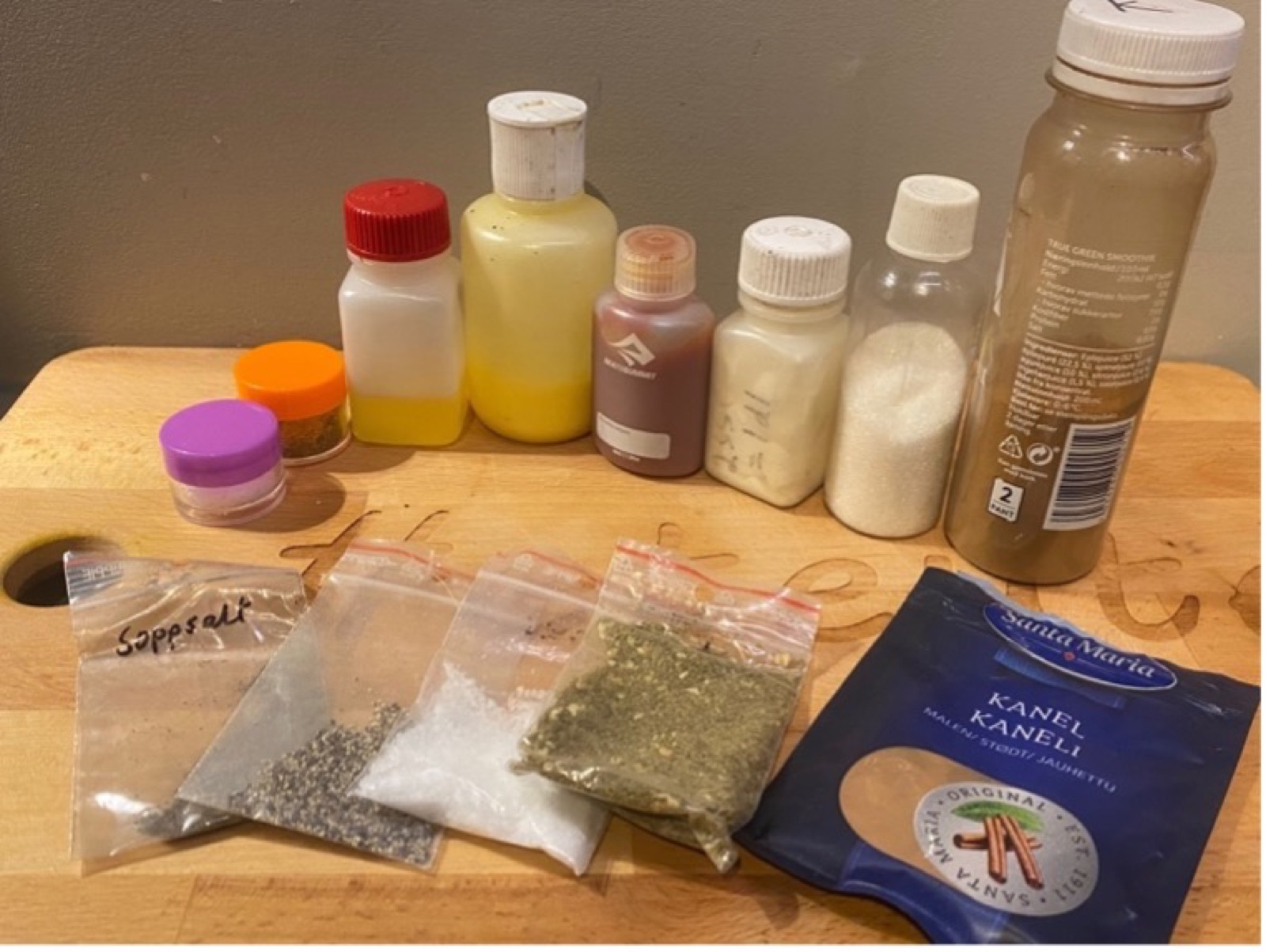
It can be a good idea to keep small bottles and tubs with tight lids that you can fill with oil, butter and spices. A contact-lens case, for instance, can be used for spices. Small juice bottles can be used for ground coffee, oil and butter.
Nutritional content
There is a difference between energy and nutritional content. Two foods can have the same amount of energy but different nutritional content. For example, a can of cola contains the same amount of energy as a handful of trail mix. The trail mix gives you fat, protein, dietary fibre and fructose, whereas the cola only gives you sugar. That is what we call empty calories. The trail mix also weighs a great deal less.
Accounting for allergies/diets
When we go on a trip with others it is important to ask whether anyone has allergies. It would be unfortunate if they could not eat the food or were made ill by it while we are out on the trip. The most common allergies are to milk and gluten. Very many ready meals and packet soups contain gluten, so it is important to read the ingredients list on the packet carefully.
- Milk/lactose: can use products made from soya, oats, rice and coconut
- Coeliac disease/gluten allergy: can eat porridge oats (must be gluten-free oat flakes), and porridge made from millet, buckwheat and polenta. Read packets and sauces carefully because much of it contains gluten.
- Diabetes: must avoid too much sugar in the diet. Should carry something sweet in case of a hypo
- Vegetarian: must eat beans, lentils, soya products and dairy products to get enough protein. To increase the uptake of iron from food they should eat foods rich in vitamin C such as peppers, parsley, lingonberry, white cabbage, kiwi, cloudberry and bilberry.
(Henjum, 2016)
Sustainability
Eating more sustainably means taking account of how the production of the food affects the climate, social conditions and the economy. That is, thinking about the body, society and the planet alike.
One of the most important sustainability measures you can take is to avoid throwing food away (Øvstebø og Gausdal, 2020) .
Plan so that you avoid having to throw food away, whether because it has gone off or become unappetising. One tip is to eat the food with a short shelf life first.
Different foods have different climate footprints or carbon footprints. That is, the amount of CO2 released in connection with producing the product. Producing plant-based food has a smaller climate footprint than meat and dairy products. It takes more resources and land to produce meat than plant-based food. That is why it is better to eat more vegetarian food and produce less meat (Øvstebø, 2020).
Have you considered how far the food has travelled before you are going to eat it? Some foods have to be imported from other countries, such as coffee, sugar and oranges. We also eat a lot of rice in Norway, but have you thought about where the rice is grown? In Norway we produce pearl barley, which is an alternative to rice (Øvstebø og Gausdal, 2020).
Eat the season’s vegetables and foods: that way you contribute to lower CO2 emissions because the vegetables have not been transported and kept in chilled and frozen storage over a long period.
Overview of when the different vegetables are in season (the Information Office for Fruit and Vegetables).
The most local food of all is the food you pick yourself in nature. In Norway we have allemannsretten (the right to roam), which ensures that we may pick mushrooms, berries and other plants. There are also good opportunities to fish and to catch crabs. Remember to check whether you need a fishing permit (fiskekort) if you are planning to fish on the trip. Fishing in the sea is permitted in most places, while fishing in fresh water often requires a fishing permit.
Food from nature
Food from nature - wild plants
Overview of fishing permits (Inatur).
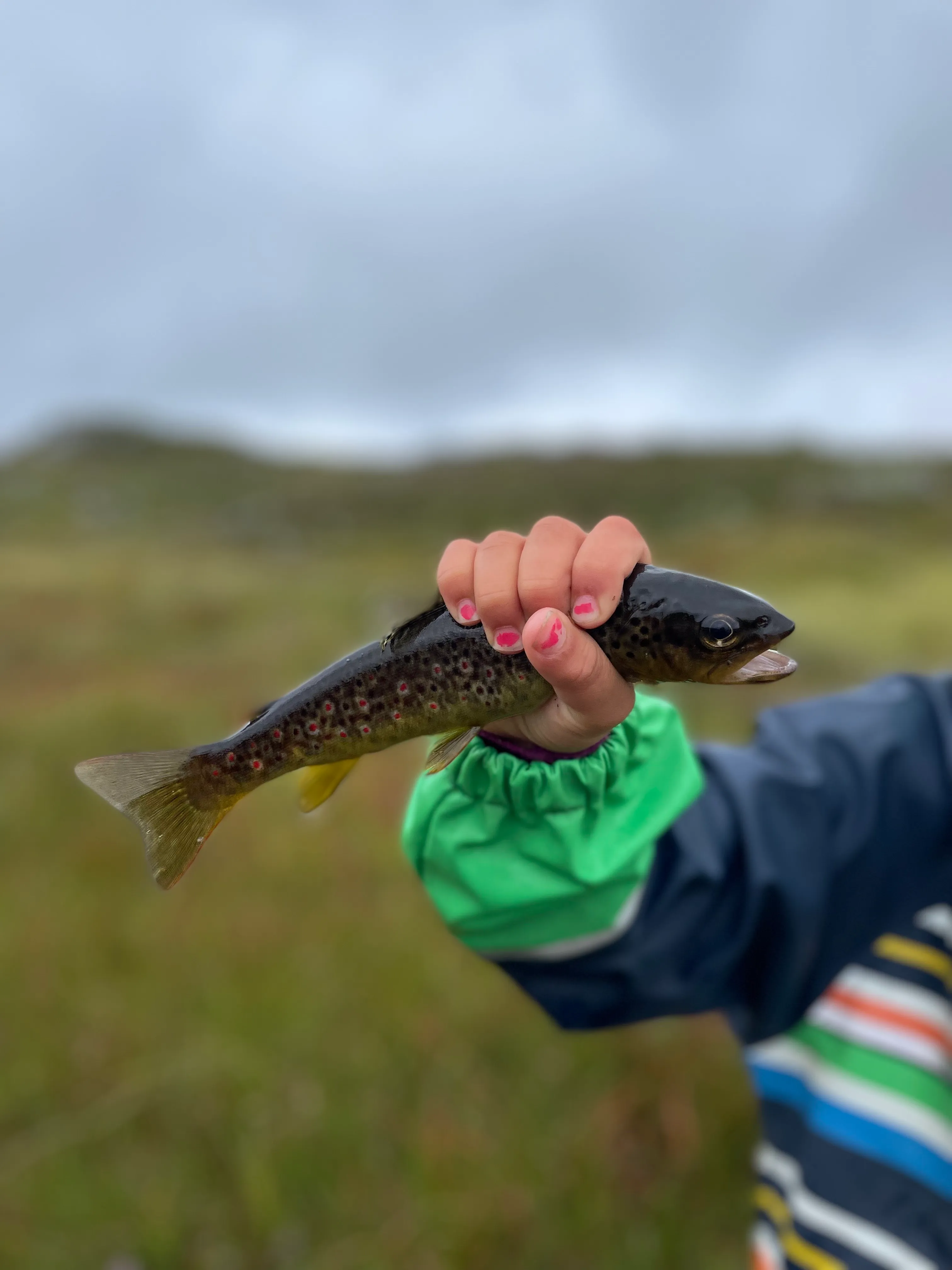
Photo: Gina Wigestrand
Next steps
- Cooking on the trip — putting it into practice
- Food and nutrients — nutritional needs
- Dry your own trail food — preparation at home
- Food on the trip — the hub
Learn more
- Mattilsynet — drinking water and hygiene — food safety outdoors
- Helsedirektoratet — dietary advice — nutrition
- Sopp- og Nyttevekstforbundet — mushrooms and wild plants
- DNT — trail food — recipes and tips