Food
Food and nutrients
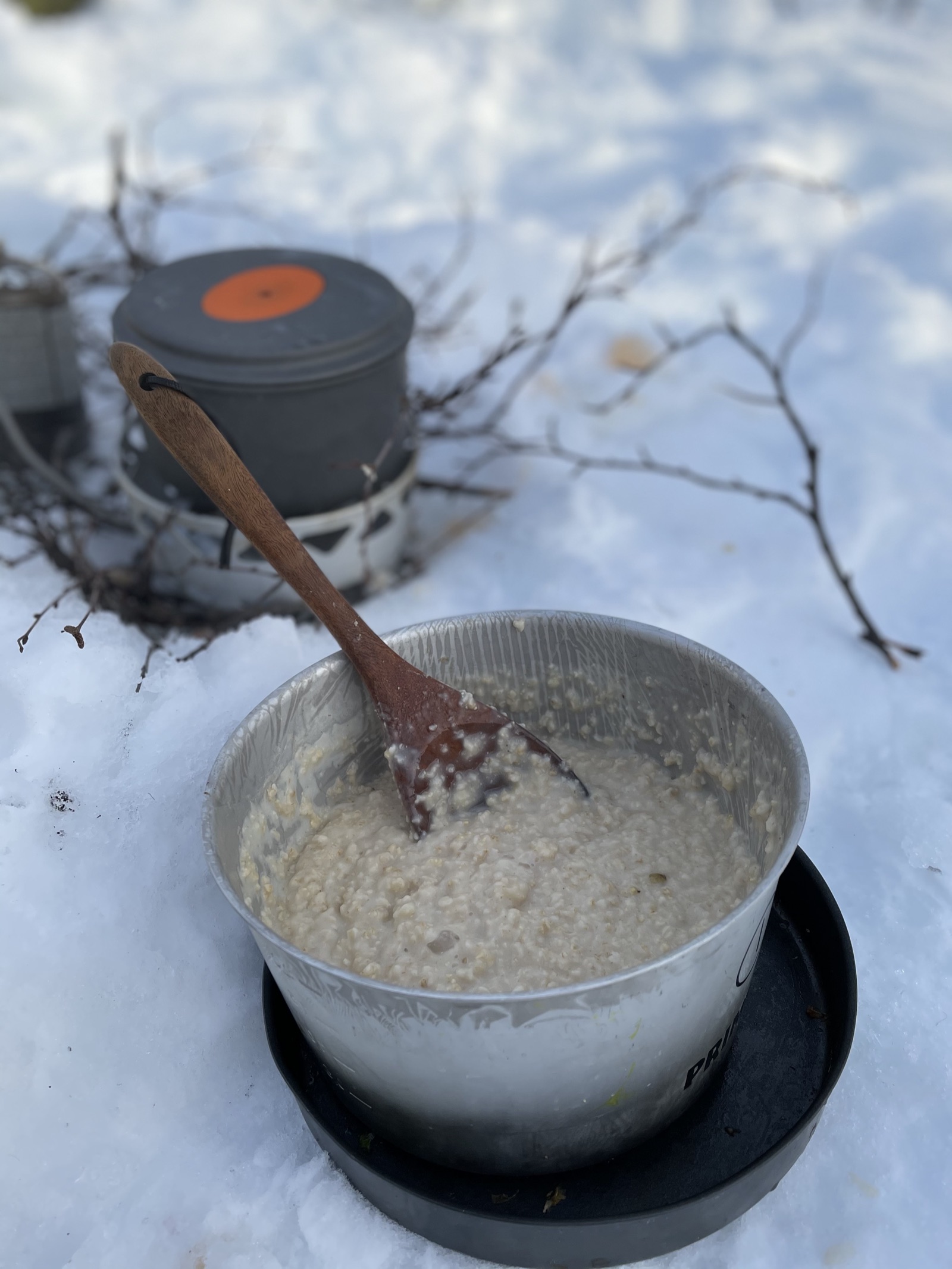
The body needs fuel in the same way a car does. The food we eat can be divided into the following nutrients: proteins, carbohydrates and fat.
The body needs fuel in the same way a car does. The food we eat can be divided into the following nutrients: proteins, carbohydrates and fat. Vitamins and minerals come in addition. But have you considered that water may be the most important of them all?
Water
Although the body is made up of 50–70% water, it cannot store water the way it stores nutrients from food. That is why it needs regular topping up. Water is essential for the body to function and to be able to take up nutrients. It is very important to get enough water on a tur (outing), both through drink and through food. You quickly become tired, sluggish and irritable if you drink too little. Normally the body needs about 2.5 litres of water each day. The need for water rises to 3–5 litres per day when you are physically active, such as on a long mountain hike (Kvam, 2019).
Remember
- drink often and keep water within easy reach
- drink twice as much as your thirst suggests
- carry a thermos for hot drinks in winter and cold drinks in summer.
(Pedersen, 2020)
Proteins
Proteins are the body’s building blocks. They build up the body and repair muscles after physical activity. Since protein cannot be stored in the body, we must make sure to eat it regularly (Kvam, 2019).
Good protein sources: fish, meat, milk, cheese, eggs, nuts, soya products, legumes, beans, lentils and grains.
Carbohydrates
Carbohydrates contain a lot of energy, are easily digestible and give energy quickly. We divide carbohydrates into slow and fast. Slow carbohydrates such as oat porridge give a steady rise in blood sugar and last longer than fast carbohydrates such as chocolate. We find carbohydrates mainly as sugar, starch and dietary fibre (Kvam, 2022).
Sources of slow carbohydrates: coarse bread, oats, wholegrain rice, pasta, beans, lentils, rye.
Sources of fast carbohydrates: marzipan, chocolate, raisins and dried fruit (Henjum, 2016).
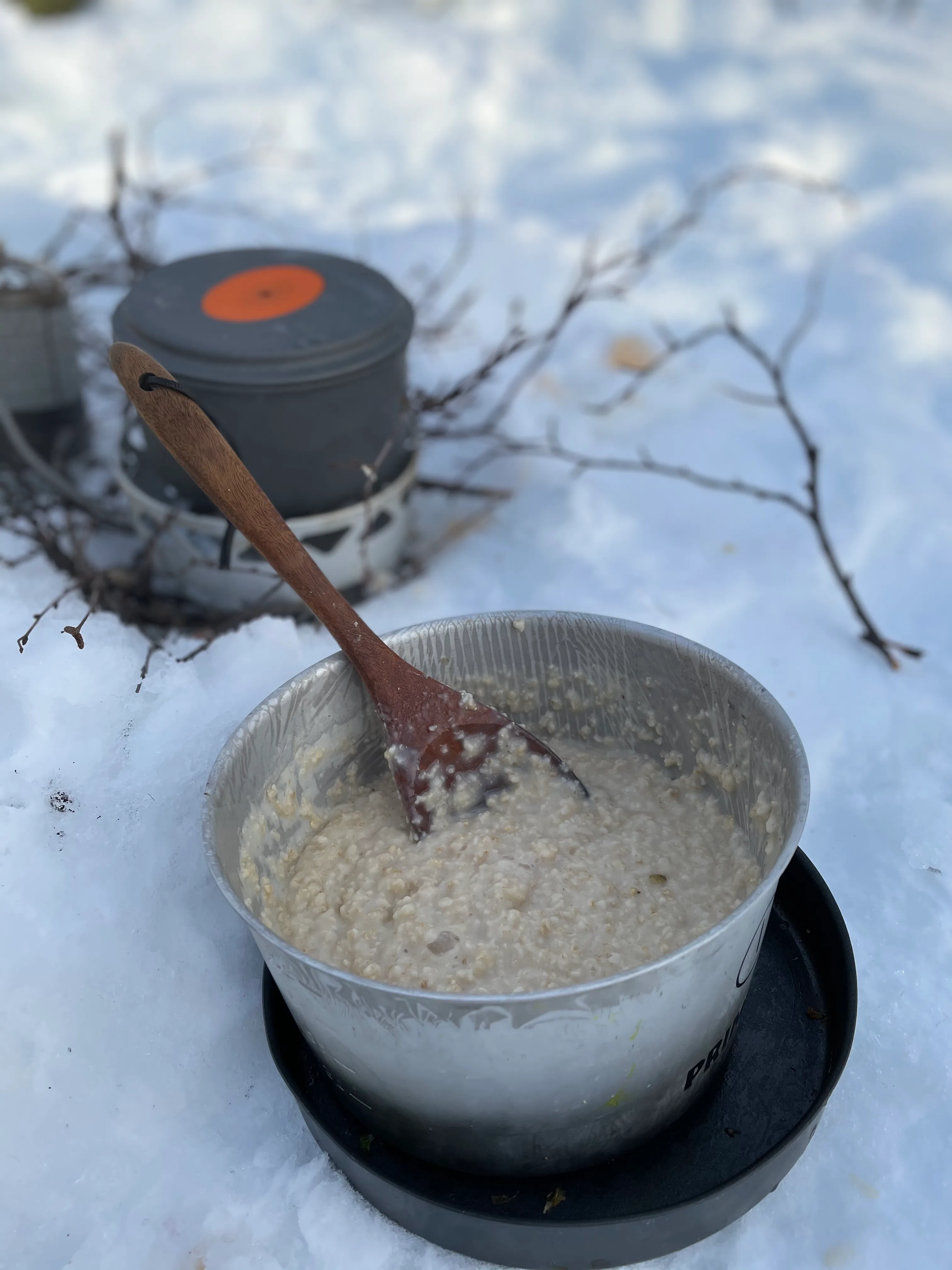
Photo: Gina Wigestrand, Snuitide
Fat
Fat contains more energy per gram than both carbohydrates and proteins, and can be stored in the body. Fat in food is divided into saturated and unsaturated fat, which says something about how the molecules are built up. It is recommended to eat mostly unsaturated fat, because saturated fat increases the risk of cardiovascular disease (Kvam, 2019).
Sources of saturated fat: dairy products, meat, margarine, coconut.
Sources of unsaturated fat: cooking oils, nuts, fish, especially oily fish such as mackerel, herring, salmon and trout
(Bønes, Bedin, Aurebekk, 2020).
Ideal composition from Helsenorge:
Carbohydrate: 45–60%
Protein: 10–20%
Fat: 24–40%
More on energy needs
Helsenorge - energy needs
Next steps
- Planning trail food — plan according to nutrition
- Cooking on a trip — practical cooking
- Dry your own trail food — preparation
- Food on a trip — the hub
More on the topic
- Mattilsynet — drinking water and hygiene — food safety outdoors
- Helsedirektoratet — dietary advice — nutrition
- Sopp- og Nyttevekstforbundet — mushrooms and wild plants
- DNT — trail food — recipes and tips