Overnight Stays
Cabins available in Norway
Several providers have cabins in the mountains. Both organisations and private owners let out cabins, and some cabins stand open for use.
Several providers have cabins in the mountains. Both organisations and private owners let out cabins, and some cabins stand open for use. DNT is the organisation with the most cabins available to the general public. But there are a number of other providers that let out cabins. Here we have listed a selection.
Contents
DNT
The largest collection of cabins available for public use is run by the Norwegian Trekking Association (DNT), with its 550 cabins.
Using DNT cabins
The Norwegian Trekking Association has a mix of no-service and staffed cabins. At staffed lodges you are served meals, come to a made-up bed and need think of nothing more than enjoying yourself as much as possible. Most of the association’s cabins are self-service (with provisions) and no-service cabins (without provisions). Here you can see how to use these cabins.
1. Planning
Planning is an important part of the trip. You are already on our website, which is a very good start! Go to UT.no and find a touring area, route suggestions and cabins that appeal to you. Get hold of a map of the area and a DNT key. Pack your rucksack and set off.
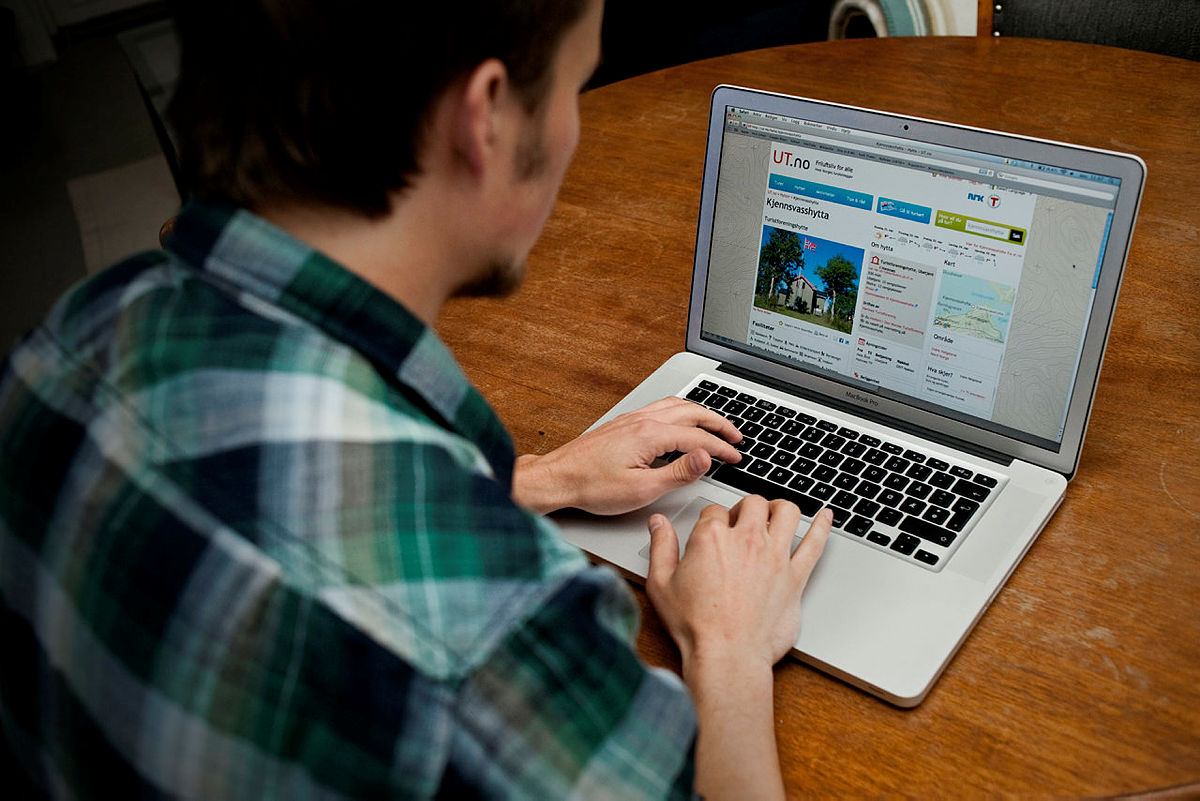
Photo: Sindre Thoresen Lønnes
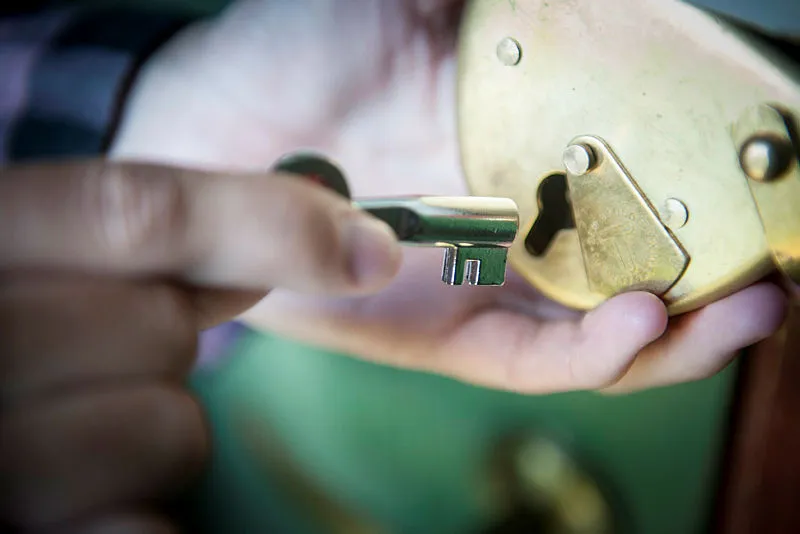
Photo: Sindre Thoresen Lønnes
2. The key
Most of the cabins without a warden are locked with DNT’s standard key. So it is a good rule always to keep this little key in your rucksack when you head out. Members can borrow the key against a deposit of 100 kroner. Buy the key in our online shop. You can also buy the key through our local hiking clubs/touring associations, as well as certain tourist offices and shops.
3. Lighting the stove
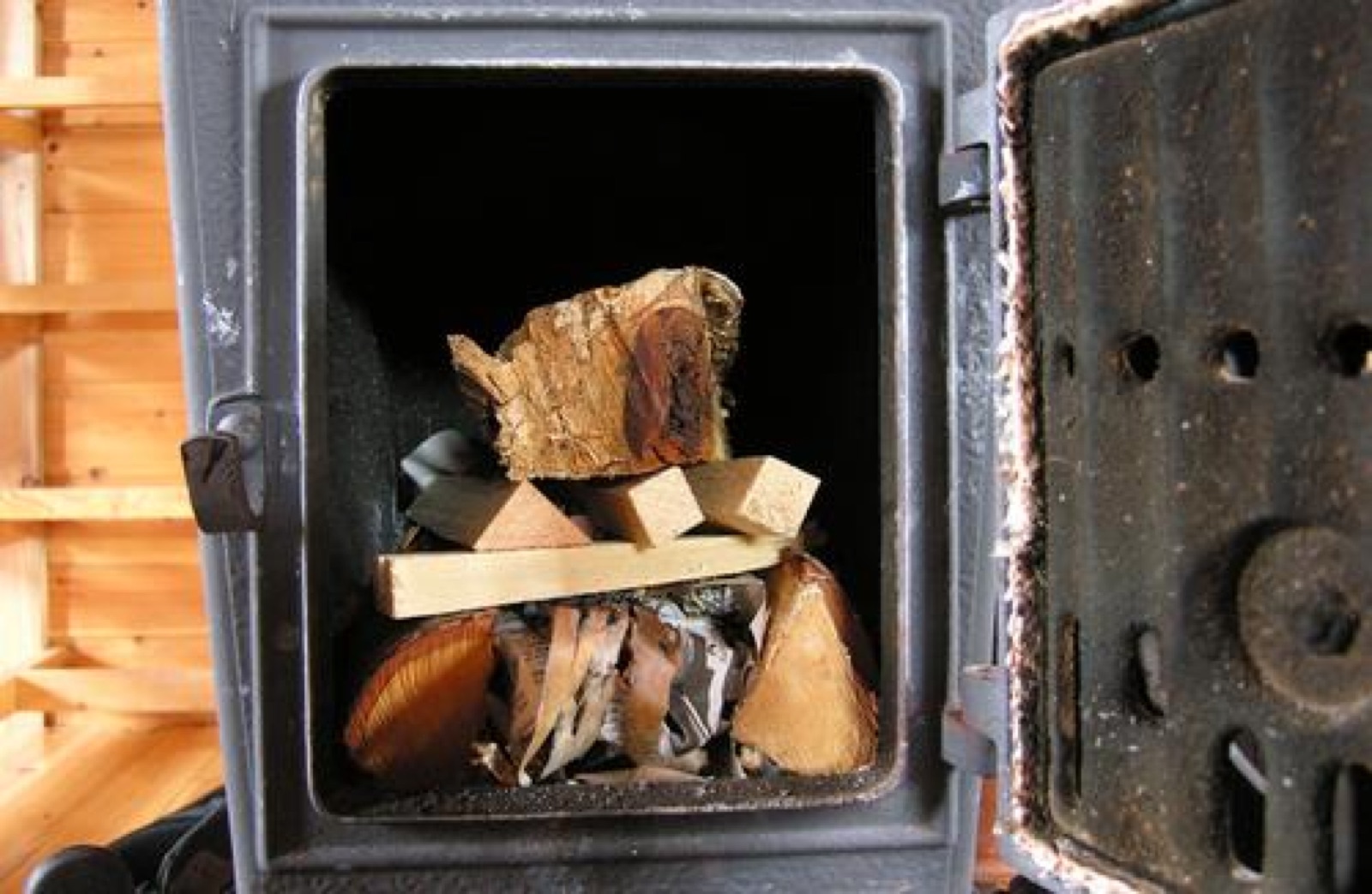
Once you have settled in at the cabin, it is time to light the stove. Place two small split logs on each side of the stove with the split side facing in. Fill the cavity with paper, birch bark and other readily flammable material. Lay kindling crosswise over the top and finish with a larger log on top. You are guaranteed a fire on the first attempt!
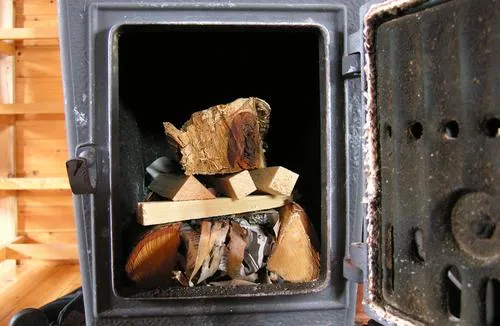
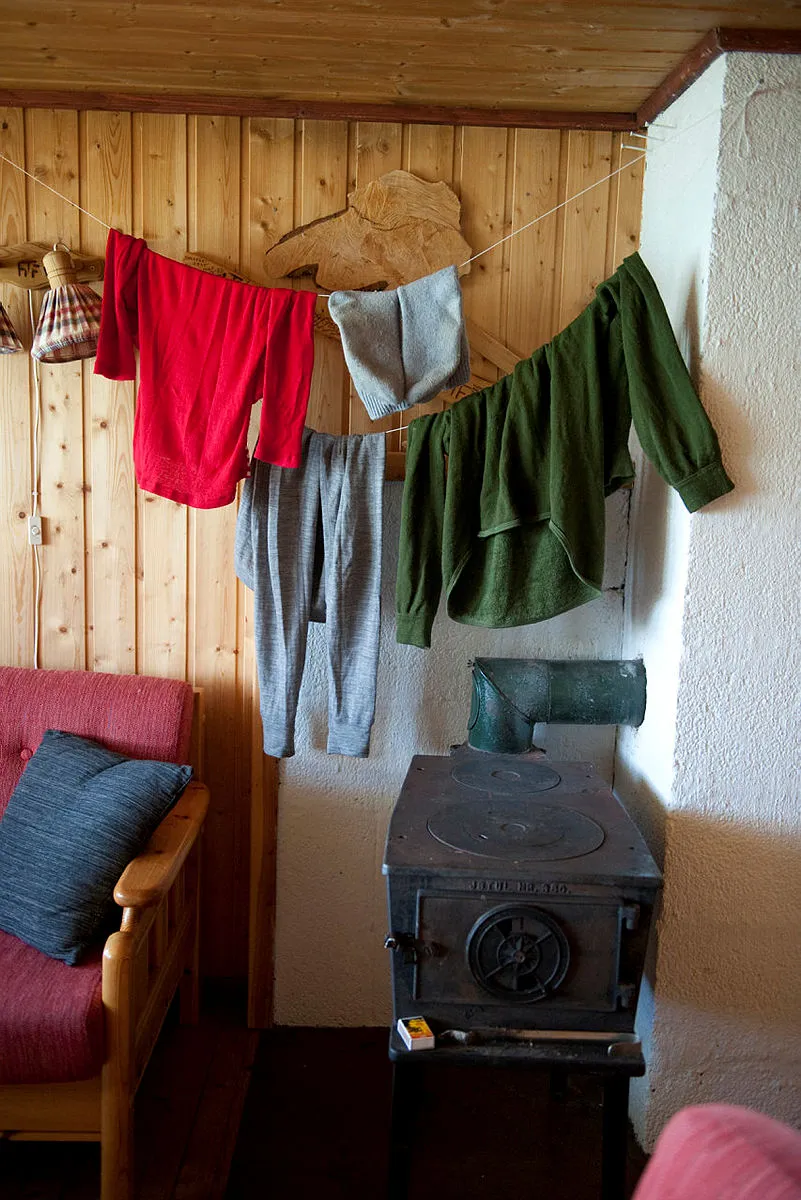
Photo: Sindre Thoresen Lønnes
4. Drying
A lot can be wet after a day outdoors, and there is usually good provision for drying clothes and footwear by the stove. Hang up the wet things and get into dry ones as quickly as possible.
5. The logbook
While the cabin warms up you can sign yourself into the logbook with your name, membership number and a little other information. You are not entitled to a bed until this is done.
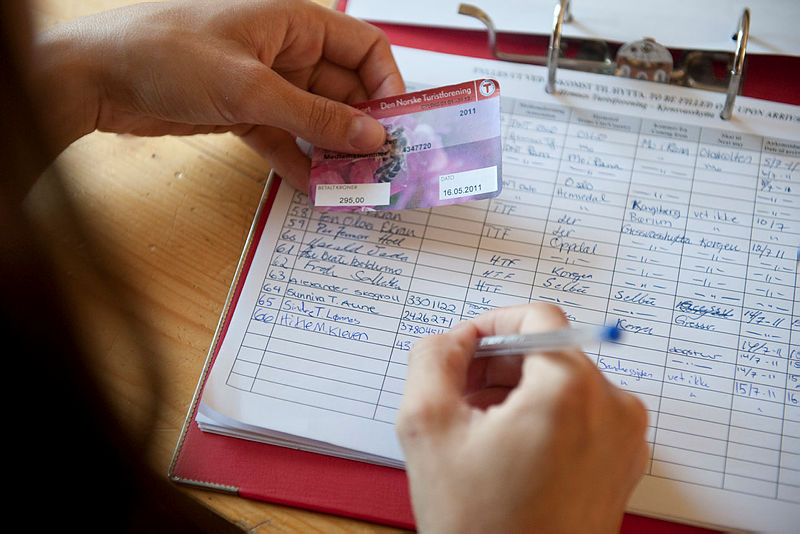
Photo: Sindre Thoresen Lønnes
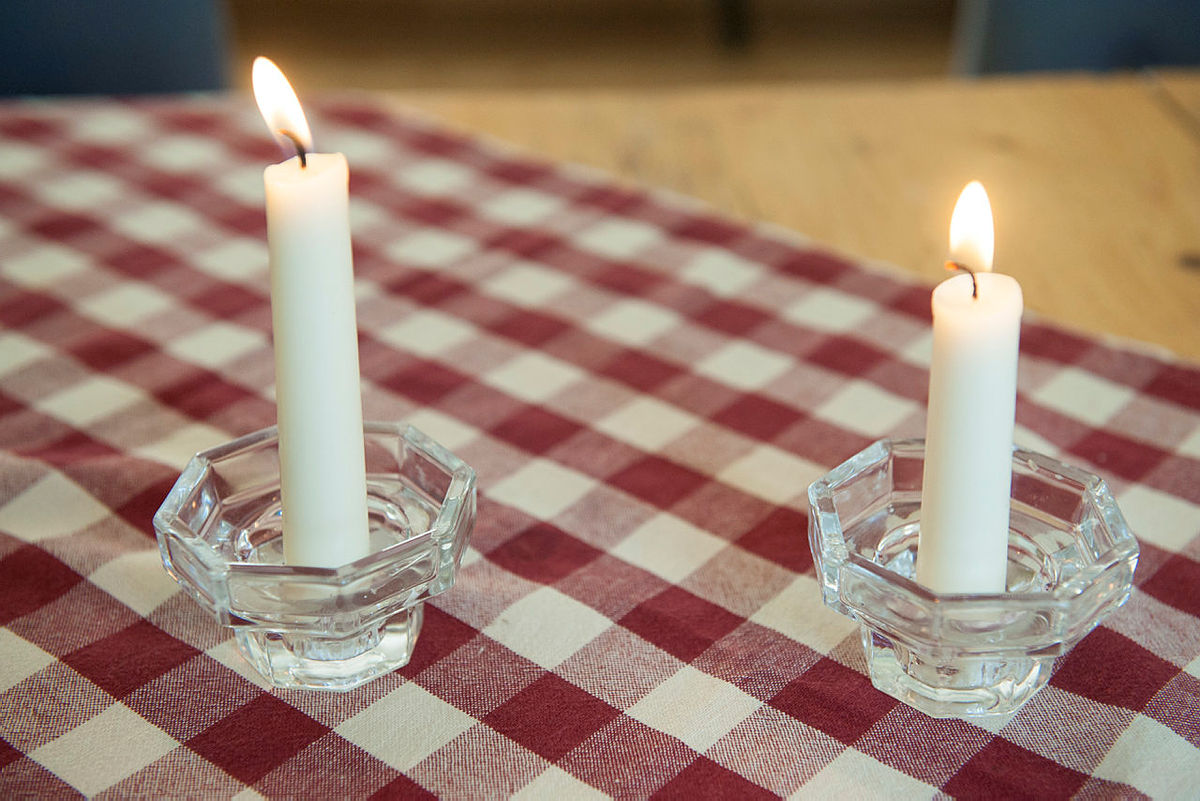
Photo: Sindre Thoresen Lønnes
6. Light
Some cabins have mains electricity or solar power. At most cabins, however, it is candles or paraffin lamps that apply. Remember to check that the candles sit firmly in the candlestick. Also take care not to spill lamp oil when you refill the paraffin lamp.
7. Food store
All self-service cabins have a food store. Here you can take out everything you need, from crispbread and rolled oats to packet soups and tinned food. You will find information about payment for the provisions you use at the cabin, or on a notice by the food store. No no-service cabins have a food store, so you must bring all your food yourself.
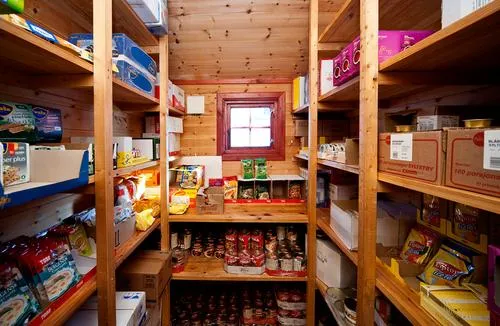
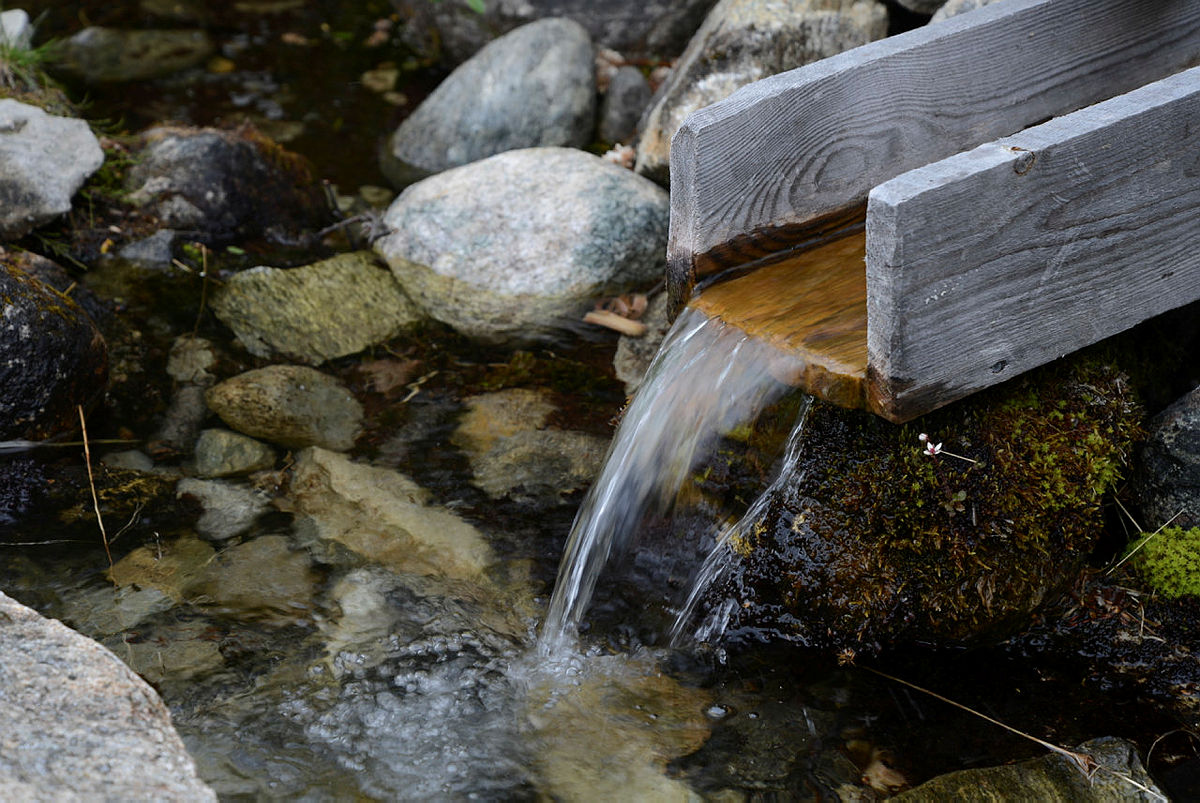
Photo: Julie Maske
8. Water
At the cabin you will find a notice about where the nearest water source is. In winter you often have to melt snow. Do this on the stove if you can, to save the gas for cooking.
9. Cooking
A propane appliance for cooking is the standard at the cabins. Before you can light it, you must flick this switch to the ‘open’ position. Remember to flick it back when you have finished cooking.
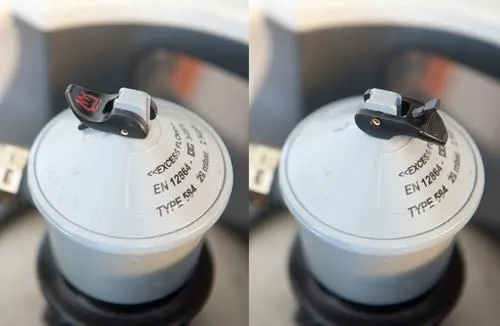
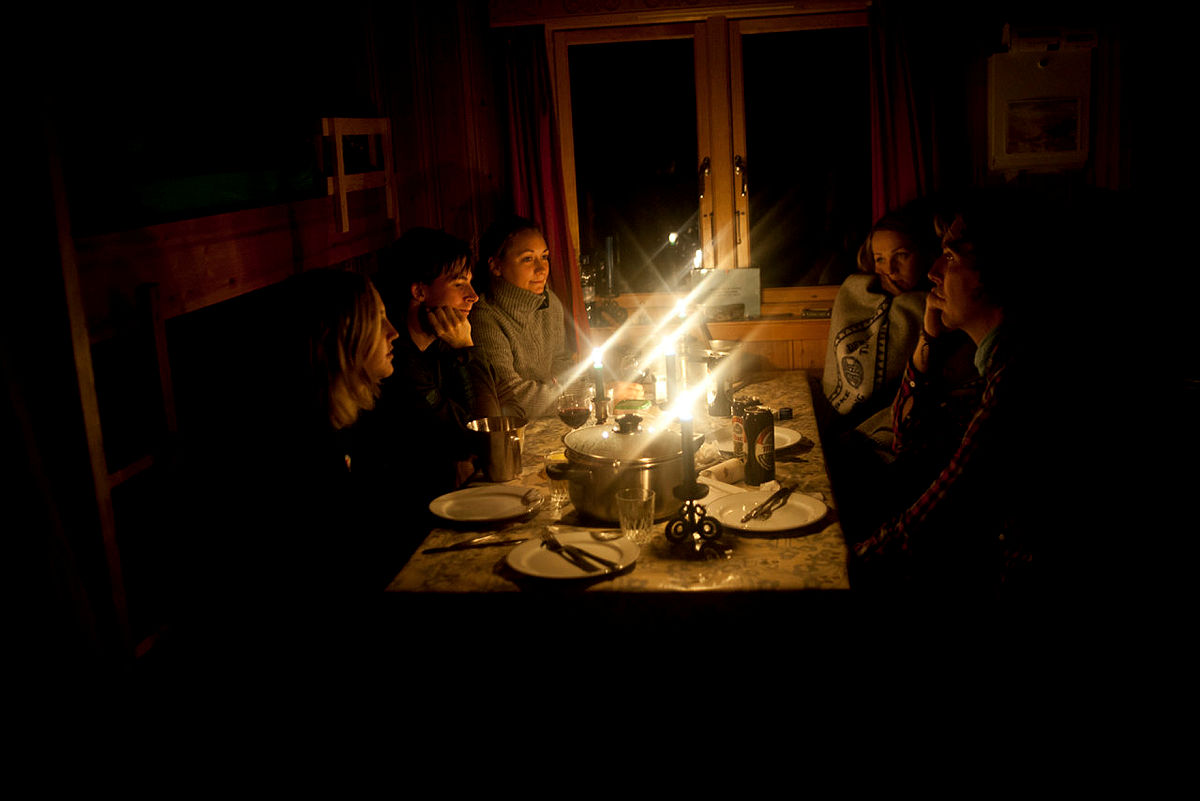
Photo: Sindre Thoresen Lønnes
10. Dinner
This is the highlight of the evening, whether you eat venison you have brought along or pancakes from the food store. Remember to take plenty of time over the meal. And a piece of chocolate afterwards.
11. Sleeping
Nothing is like crawling into bed after a long day in the mountains. Remember to bring either a sheet sleeping bag or a small sleeping bag on the cabin trip. Show respect for those who want to turn in early. Then they will hopefully show respect for whoever wants to sleep late the next morning. A head torch is a good tip if you want to read in bed.
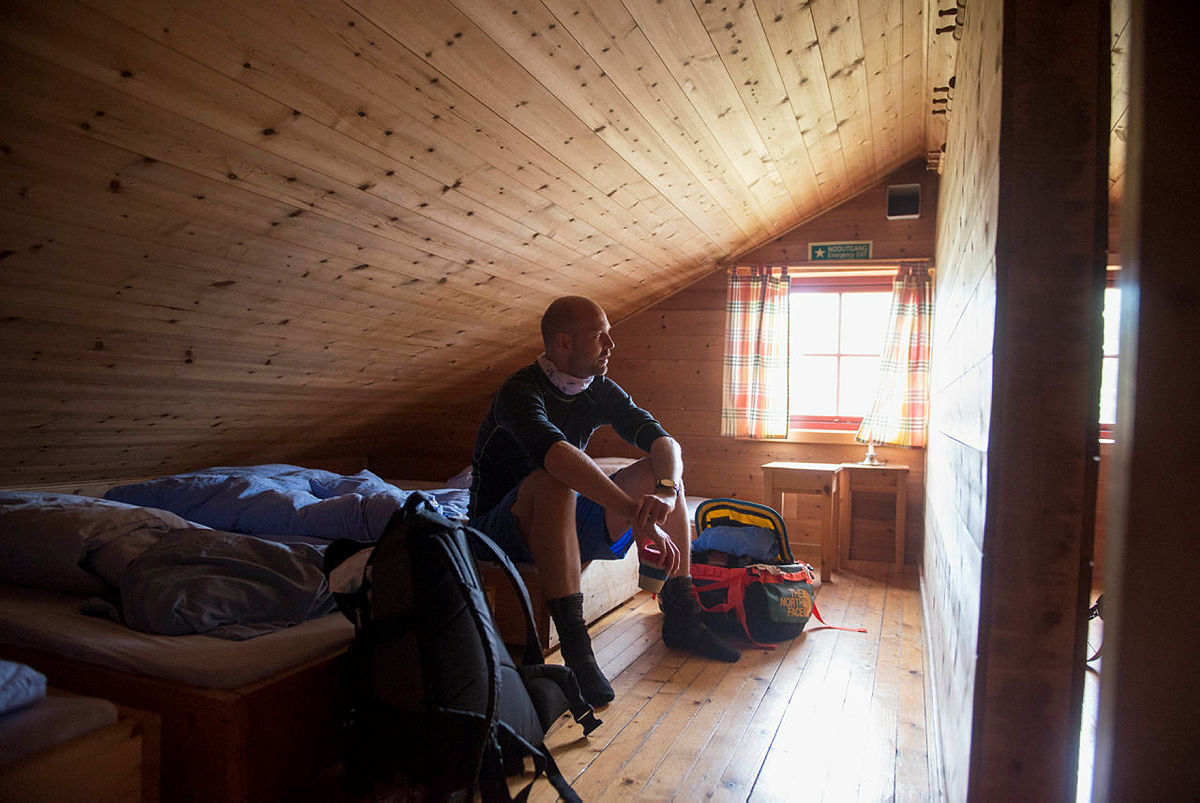
Photo: Sindre Thoresen Lønnes
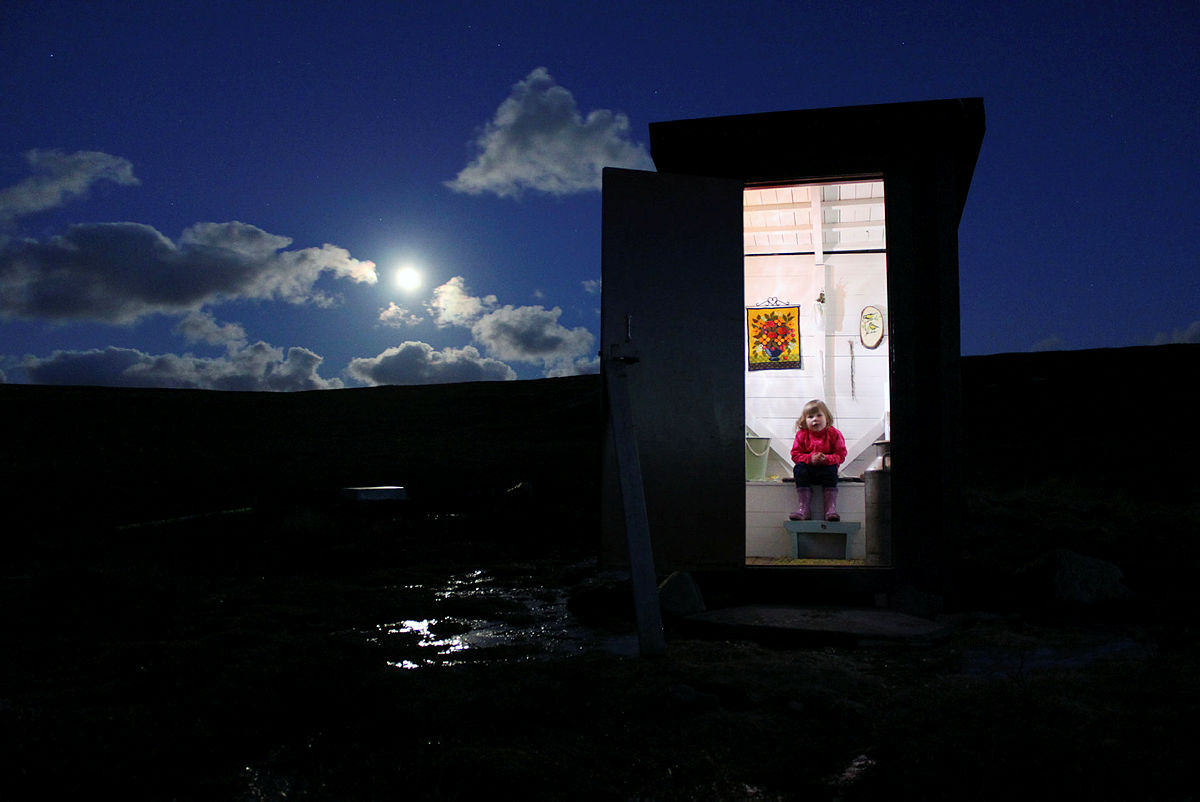
Photo: Maria Losoa Pettersen
12. Toilet
It is an outdoor privy that applies at the DNT cabins. Here you often find both a picture of the royal family and some pleasant reading matter. Remember to use the peat or bark sack to sprinkle over what you have left behind.
13. Payment
Be aware that the payment arrangements at the cabins will vary across the different DNT member associations. Most often you pay for a cabin when you book in advance. At some cabins you fill in a payment form that is put into a locked box/safe at the cabin. You are then sent an invoice by email/SMS/post. At some cabins you can pay with the DNT hyttebetaling app or with Vipps. Remember also to pay for the provisions you take from the food store at a self-service cabin.
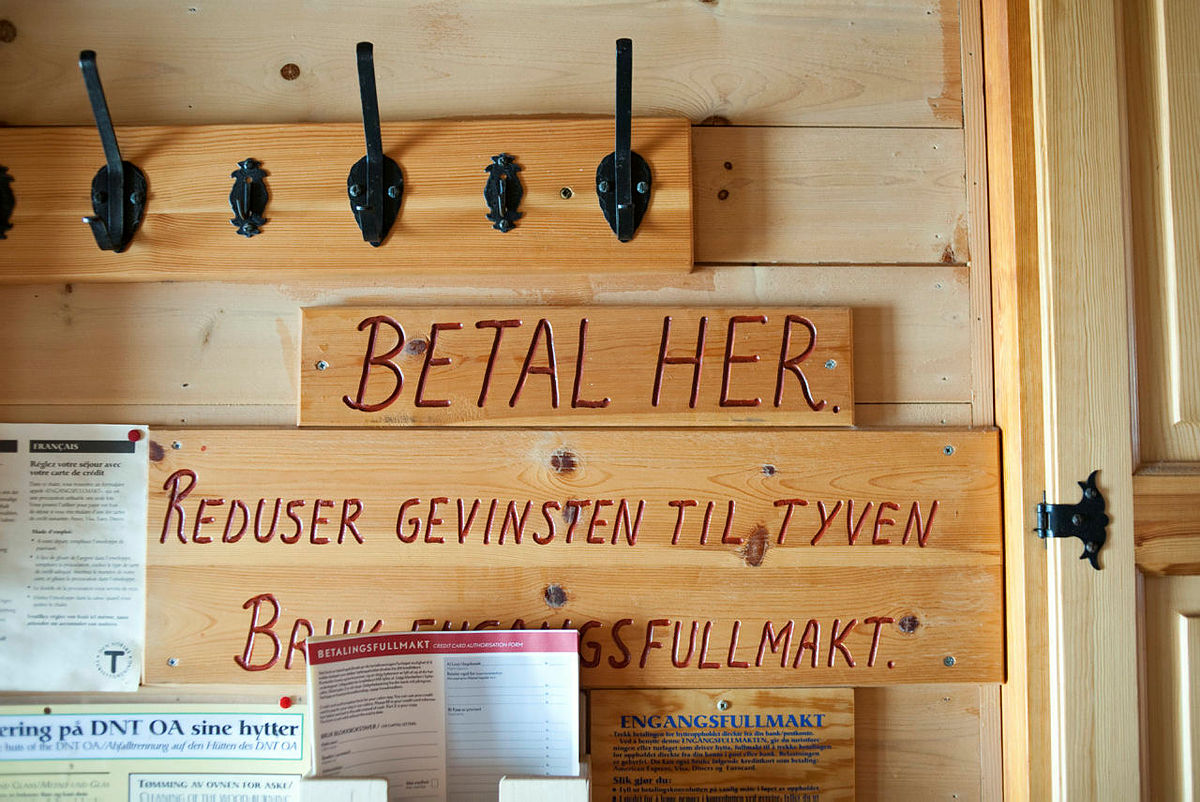
Photo: Sindre Thoresen Lønnes
Betal hytteoppholdet med mobilen! - DNT Oslo og Omegn
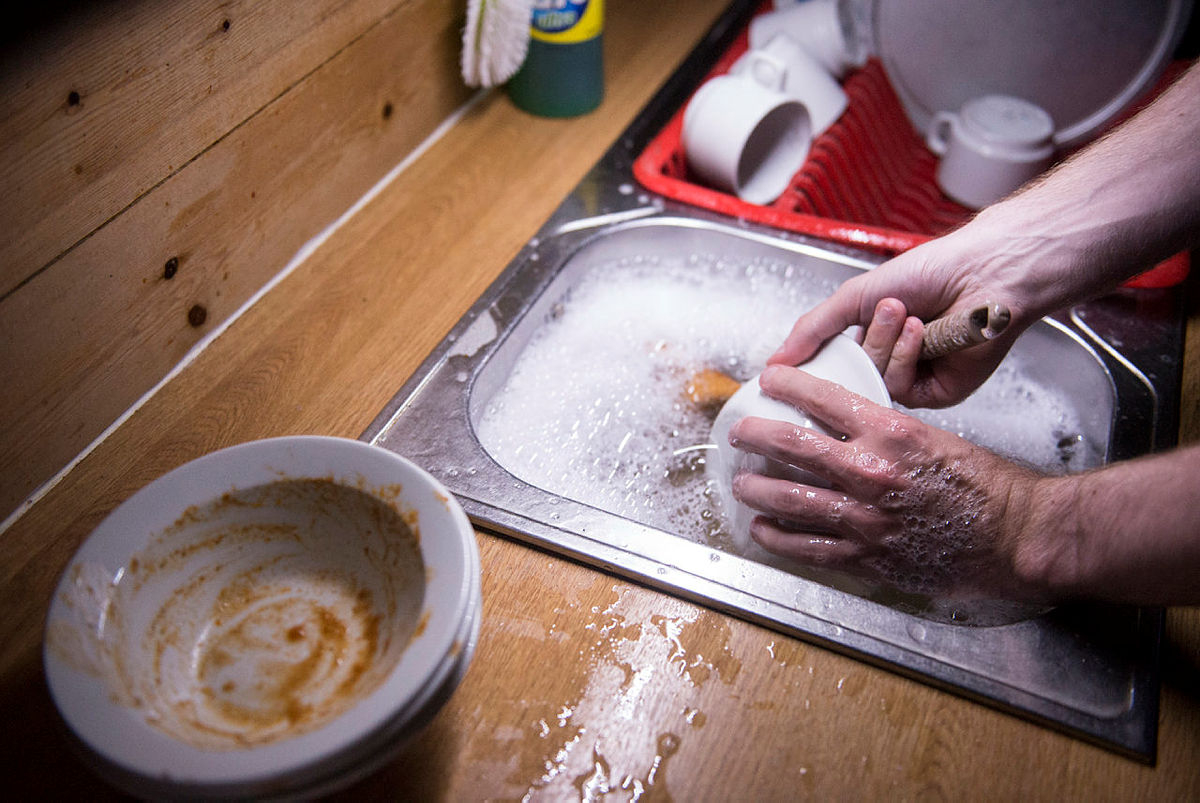
Photo: Sindre Thoresen Lønnes
14. Cleaning
Cutlery, plates, worktops and floors must all be cleaned before you leave the cabin. Leave the cabin in slightly better condition than when you arrived.
Den Norske Turistforening (n.d.) https://www.dnt.no/hytteguide/
-
Sources
Den Norske Turistforening (2017, 5 April) Slik bruker du DNTs selvbetjente hytter [Video clip]. Retrieved from https://www.youtube.com/watch?v=m0xUjLwAYr4
Den Norske Turistforening (n.d.) HYTTEBESØKET FRA A TIL Å. Retrieved from https://www.dnt.no/hytteguide/
Statskog and private cabins
Statskog is a public enterprise that manages properties throughout Norway. It also has cabins on its properties that are let out. On the website inatur.no all of Statskog’s cabins are gathered. Here you will also find a number of private cabins for let across the whole country.
Fjellstyre cabins
Around the country there are several local fjellstyrer (mountain boards). The mountain boards, together with Statskog among others, are to safeguard the commons rights.
In addition to the state commons (statsallmenninger) being important recreational areas for the population of the whole country, the villages’ collective rights in these areas are of decisive importance for sustaining viable rural communities. The commons rights vary somewhat from common to common and also change over time. Important usage rights today are grazing, summer-farming, hunting, trapping and fishing.
(Norges Fjellstyresamband, paragraph 1)
The mountain boards, like Statskog, have cabins in the state common (statsallmenning) to which they belong. Some of the cabins are not online, and some cabins are on inatur (see the link under Statskog). Contact the fjellstyre in the area you are heading to if you cannot find cabins online.
Overview of fjellstyre cabins you can rent online.
Here you will find a map of the various mountain boards’ locations, so that you can see whether there is an active fjellstyre in the area you are heading to:
Scout cabins
The Scouts have several larger and smaller sites around Norway that can be rented.
Cabins on Svalbard
The Svalbard Act regulates cabin rental on Svalbard. It is not permitted to rent a cabin on Svalbard unless you are, or have been, a resident of Svalbard (Sysselmesteren, 2021).
Visit Svalbard has compiled an overview of wilderness cabins on Svalbard. These you can visit if you sign up for an organised tour.
- Longyearbyen Hunting and Fishing Association has 12 cabins for hire.
- Borrowing the cabins requires membership.
- The association To-takteren also has four cabins for let.
- Here too you must be a member, and apply to rent a cabin.
The Norwegian Association of Hunters and Anglers – for members
Several local branches of the Norwegian Association of Hunters and Anglers have cabins available to borrow. This is first and foremost an offer for members.
Other providers
It is also possible to rent cabins on digital platforms such as Finn and Airbnb. Here many of the landlords are private parties, and the rules for renting can vary from landlord to landlord.
Next steps
- Tent and lavvo — when a cabin is not an option
- Other types of outdoor accommodation — the alternatives
- The Outdoor Recreation Act and the right to roam — rights and duties in uncultivated land
- Accommodation on tour — the hub
Learn more
- DNT — cabins — the cabin network and booking
- UT.no — route suggestions, cabins and places to stay
- Norsk Friluftsliv — leave-no-trace travel — principles for camp and travel
- Statskog — rental properties — cabins on state land
- Norske Hytter — private rental