Assessment
Description: Both during and afterwards, we should reflect on what happened and why. In this way we can reinforce learning and foster the positive experiences of teaching.
7 articles
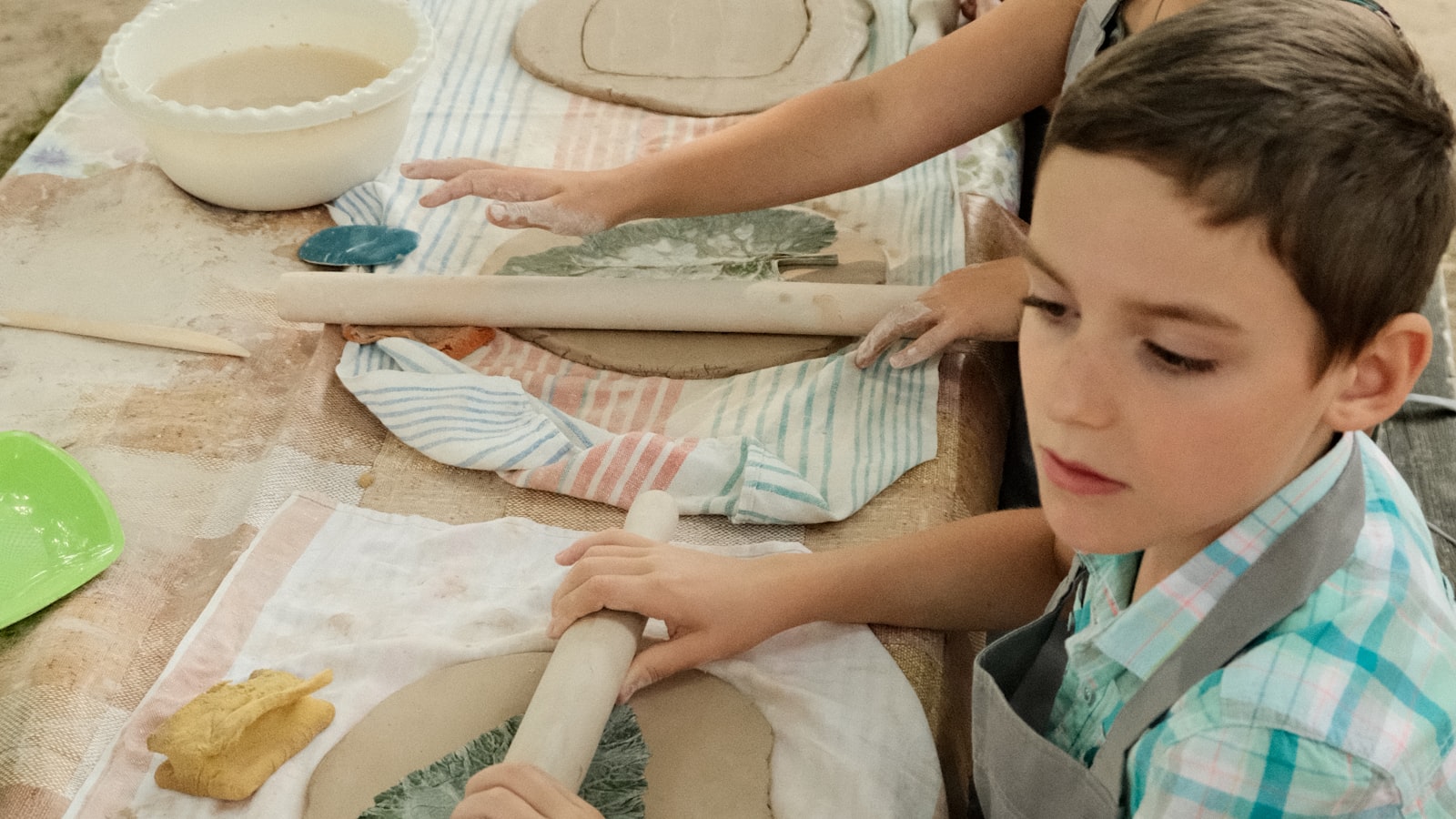
Friluftsliv pedagogy is the study of how people learn in and about nature within the Norwegian friluftsliv tradition (friluftsliv being the Norwegian tradition of unhurried, outdoor open-air living). It is not only a school subject — it is a discipline just as relevant to DNT trip leaders, paddling instructors, climbing-course tutors, Scout leaders and parents who take their children out and think about how the child develops through the trip.
The pedagogy arose in Norway in the 1970s as an alternative to instructive school pedagogy. It drew its strength from Nils Faarlund, Bjørn Tordsson and the generation at the centre of Norges Høgfjellskole (Norway’s High Mountain School) and the friluftsliv programme at the Norwegian School of Sport Sciences (Norges idrettshøgskole). Today, Norwegian friluftsliv teaching and course work still carry the clear fingerprint of their thinking.
Friluftsliv as a school subject entered the Norwegian curriculum in the 1974 national curriculum (Mønsterplanen). But a decisive development came after the Easter disaster of 1967 (ulykkespåsken 1967), when 17 people lost their lives in the mountains. This created interest in preventive training (Horgen 2010; Leirhaug et al. 2019).
In 1967, Norges Høgfjellskole (Norway’s High Mountain School) was founded with Nils Faarlund at the helm. An important contribution to the literature was the compendium Friluftsliv, hva — hvorfor — hvordan (Faarlund 1974). Friluftsliv became a specialisation subject at the Norwegian School of Sport Sciences in 1972, with Faarlund and his ideas about friluftsliv and nature conservation at its centre.
Friluftsliv and nature conservation were two sides of the same coin: friluftsliv was the means, nature conservation the goal (Haslestad 2002). Winning more “friends of nature” was a stated objective. The spelling vegledning, with a G, symbolised joy and dannelse (Bildung) in free nature.
Faarlund and his circle formulated principles early on that still apply:
Friluftsliv pedagogy is built on a conviction that knowledge and skills are developed by trying and experiencing for oneself.
— Gurholt (2010)
The term veileder (guide) was deliberately chosen as a counterweight to the instructor. The guide is not “the one who knows best”, but the one who invites participants towards mastery and reflection. The guide has subject expertise, but leaves room for the pupil/participant to be active themselves.
The difference between the two roles is practical:
Different situations call for different doses of each. Leadership should be situation-dependent — in a crisis situation (avalanche, injury) the instructor role is the right one; in a mastery situation (learning to pack the rucksack for the first time) the guide role is the right one.
To plan teaching, the didactic relation model (Bjørndal & Lieberg 1978; Hiim & Hippe 2009) is often used — a diamond in which all the factors influence one another:
Whatever aim we have influences who ought to take part, which framework conditions are needed, what is suitable content. Change one factor and you have to check the others.
More about the didactic relation model and its elements →
For trip planning and risk assessment, the 3×3 filter method (Munter 2017) is much used. Three criteria:
Assessed at three scales:
More about the 3×3 filter method in the avalanche category →
The Norwegian friluftsliv-pedagogical tradition has been shaped by several generations:
Friluftsliv pedagogy is just as relevant for:
For all of these, the pedagogy is a tool for creating good experiences in which people actually learn something, rather than simply being transported through a piece of terrain.
Friluftsliv pedagogy overlaps with:
The Norwegian distinctiveness is the combination of Faarlund’s ferd etter evne, Tordsson’s existential approach, and the eco-philosophy — a holistic pedagogical tradition that fits well with Snuitide’s Scandinavian calm rather than an American outdoor-industrial-complex approach.
Detailed sub-articles on each part of the didactic relation model:
Related: The meaning and value of friluftsliv (philosophy and dannelse) · Trip guide and trip leader (the practical guide role) · The teachers’ room (school-specific content)
Text: Snuitide (2022), revised 2026.
Sources: Faarlund, N. (1974). Friluftsliv. Hva — Hvorfor — Hvordan. · Tordsson, B. (2007). Perspektiv på friluftslivets pedagogikk. · Bjørndal, B. & Lieberg, S. (1978). Nye veier i didaktikken. · Hiim, H. & Hippe, E. (2009). Undervisningsplanlegging for yrkesfaglærere. · Munter, W. (2017). 3x3 Lawinen — Ein Reduktionsmethode für Praktiker. · Bischoff, A. (2000). Veiledning i friluftsliv. · Leirhaug, P.E. et al. (2019, 2020). · Abelsen, K. & Leirhaug, P.E. (2017, 2022). · Säljö, R. (2016). Læring. · Gurholt, K.P. (2010). Norwegian friluftsliv and ideals of becoming an “educated man”. · Horgen, A. (2010). Friluftslivsveiledning vinterstid.
Description: Both during and afterwards, we should reflect on what happened and why. In this way we can reinforce learning and foster the positive experiences of teaching.
Description: Specify what you want to work with in order to reach the aims of your teaching. The content should cover both theoretical and practical knowledge.
Description: In planning, it is also central which framework factors underlie the teaching.
Description: The curriculum for friluftsliv in schools forms the basis for the goals. It must be adapted to the situation and to the tur you are going on.
Description: When we plan teaching under the school's auspices, it is the school's responsibility to document health, safety and environment (HSE) systems that refer to a risk assessment.
Description: Everyone taking part in an outing. Covers both the pupils' and the teachers' experience and prerequisites for teaching.
Description: When we plan teaching, it is important that we consider when and how learning best takes place.