Berry picking
Berry picking — bilberry, lingonberry, cloudberry, crowberry, cranberry. How to recognise Norway's wild berries, where they grow, and why cloudberry land has its own rules in Northern Norway.
9 articles
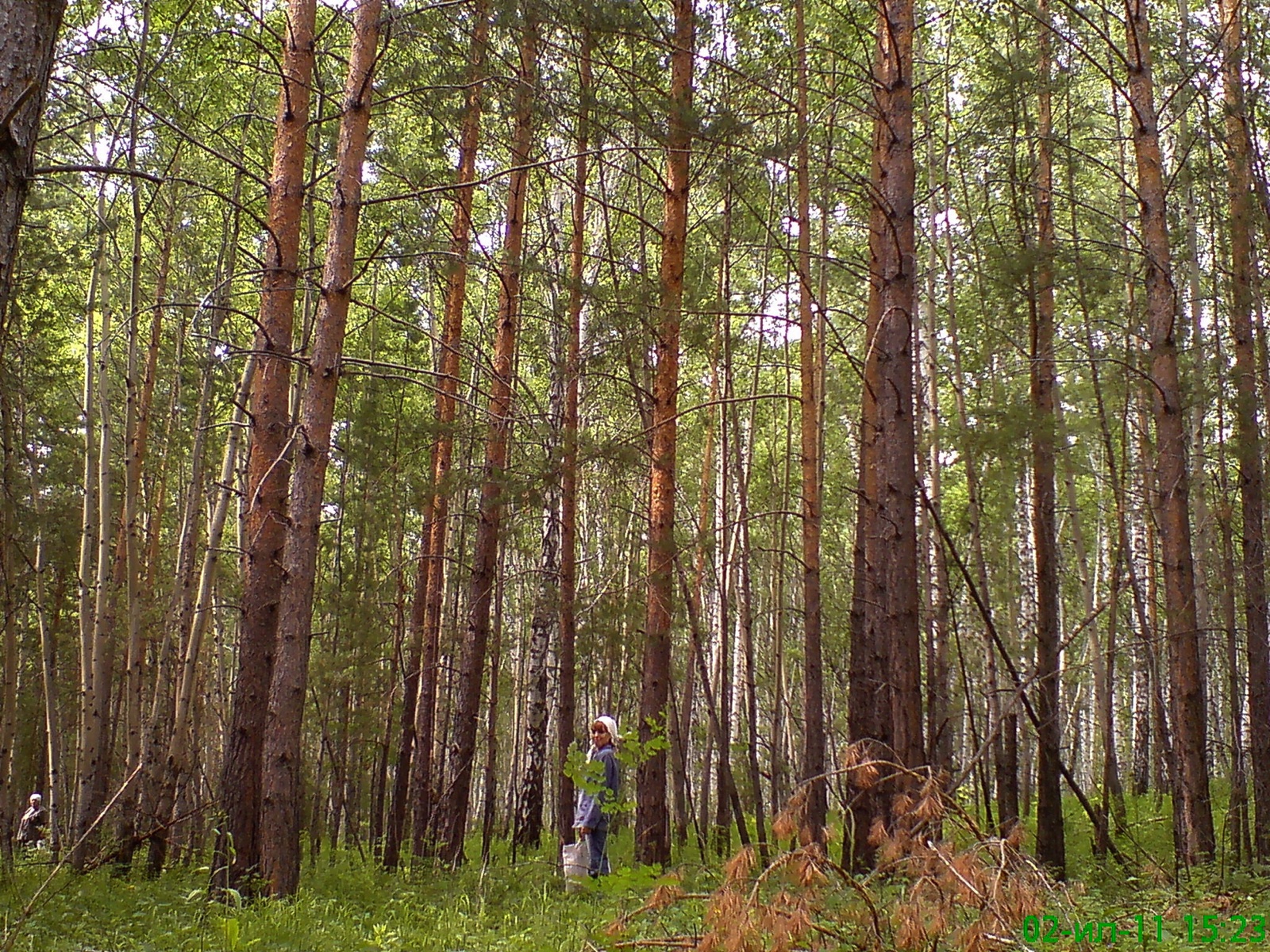
Foraging — gathering mushrooms, berries, herbs, wild plants and natural materials from utmark — is one of the most accessible forms of Norwegian friluftsliv. You need little equipment, it is a right to roam (allemannsrett), and it connects you directly to one of the country’s oldest traditions: matauk (foraging for wild food) from nature’s surplus. The Outdoor Recreation Act (friluftsloven) of 28 June 1957 § 5 enshrines the right to pick wild flowers, plants, berries, mushrooms and the roots of wild herbs in utmark, as long as it is done ‘with due care and consideration’.
Foraging is also the outdoor activity that has grown most in Norway in recent years. Statistics Norway’s (SSB) Survey on Living Conditions (Levekårsundersøkelsen) shows that 60 per cent of the population aged 16 and over had been berry or mushroom picking in the previous twelve months in 2024 — up from 55 per cent in 2021 and from a low point of just 35 per cent in 2007. The highest level since 1997 (56 per cent). The growth reflects a broader cultural turn towards local food, knowledge of nature and self-sufficiency.
For anyone new to foraging the advice is simple: go out with an experienced forager first. Mistaking one species for another is the classic danger — around 200 people are poisoned by mushrooms in Norway each year, and around 10 per cent suffer lasting harm. But the risk is very manageable if you learn a few safe species well before expanding, and use the mushroom-inspection (soppkontroll) services that the Norwegian Mycological and Useful Plants Association (NSNF) offers free of charge in season.
Foraging covers several sub-disciplines with different thresholds and traditions:
Mushroom foraging is the most common of the extended forms. A right to roam, it requires knowledge of species, and it has a well-built support structure through NSNF’s mushroom inspections. Classic edible mushrooms in Norway: cep (steinsopp), chanterelle (kantarell), winter chanterelle (traktkantarell), hedgehog mushrooms (piggsopper), slippery jacks (smørsopp), orange birch bolete (rødskrubb) and brittlegills (kremler).
Berry foraging is the classic family activity. Bilberry is the most common — found across the whole country from lowland to high mountain. Lingonberry is a classic for preserving, with natural benzoic acid that gives it a long shelf life. Cloudberry, crowberry and cranberry are regional classics. Raspberry and wild strawberry for early summer.
Herb foraging is the least widespread form, but is growing strongly. Classic wild herbs for food: ramsons (wild garlic) (ramsløk), common nettle (brennesle, 5× more vitamin C than spinach), ground elder (skvallerkål), rosebay willowherb (geitrams), common sorrel (engsyre), wood sorrel (harekål) and dandelion (løvetann).
Seaweed and sea plants — sugar kelp (sukkertare), winged kelp (butare), dulse (søl), bladderwrack (blæretang). A right to roam as ‘small quantities’, but brown algae accumulate iodine and heavy metals, and Mattilsynet (the Norwegian Food Safety Authority) advises moderate use.
Shellfish and snails — shore crab, blue mussels, cockles, snails. A right to roam, but the mussel advisory (blåskjellvarsel) must be checked before eating mussels.
Egg foraging — a distinctively Norwegian tradition, especially in Nordland (Vega on the UNESCO list). Strictly regulated today — from Trøndelag and northwards it is only permitted to gather from herring gull and great black-backed gull, a maximum of one egg per nest per year, and with a deadline of 10 May south of Nordland (25 May in Nordland, Troms and Finnmark).
Natural materials — stone, moss, lichen, holly, birch bark, bark — require the landowner’s permission. Sennegrass (bottle sedge (flaskestarr), nordlandsstarr, sennegress) is a Sámi tradition for insulation in komager.
Friluftsloven § 5 is the legal basis for foraging. The main rules:
Permitted in utmark — you have the right to pick wild flowers, plants, berries and wild mushrooms, as well as the roots of wild herbs, as long as it is done with care and consideration. Wild nuts must be eaten on the spot (not taken home).
Requires the landowner’s permission — innmark (farmyards, cultivated land, cultivated pasture, gardens). Also stone, minerals, peat, moss, lichen, holly, birch bark, bark.
Duties — Friluftsloven § 11: ‘to proceed with care and consideration so as not to cause damage or inconvenience to the owner, user or others, or to harm the environment’. Foraging is a right with duties, not an unconditional right.
Cloudberry land (multebærland) — a distinctive rule for Nordland, Troms and Finnmark. Friluftsloven § 5 second paragraph allows a landowner to impose a picking ban on areas ‘of a certain size and abundance where the use is of economic significance’. Even so, anyone may always pick cloudberries to eat on the spot.
The Finnmark Act (finnmarksloven) — on land belonging to Finnmarkseiendommen (the Finnmark Estate), residents of Finnmark have the right to pick cloudberries; visitors may only pick for their own household. The municipality may grant a commercial operator a special right for up to 10 years.
For anyone new: read the Norwegian Environment Agency’s (Miljødirektoratet) overview of the right to roam before you set out. The rules are simpler than they seem, but there are a few special cases (cloudberry land, protected areas, Finnmark) worth knowing.
Mushroom foraging is the form of foraging that requires the most knowledge and carries the greatest risk. Classic dangers:
Destroying angel (Amanita virosa) — the whole country except Finnmark. Easily confused with young field mushrooms and puffballs. Contains amatoxins that attack the liver and kidneys. Symptoms appear only 8–10 hours after ingestion. Requires immediate medical attention.
Death cap (Amanita phalloides) — coastal areas from southern Norway to Sogn. Can be confused with the green brittlegill. Also amatoxins.
Pointed and blunt deadly webcaps (Cortinarius) — cause kidney failure with a latency of 3–4 days.
Funeral bell (Galerina marginata) — the whole country, the same toxin as the destroying angel.
False morel (Gyromitra esculenta) — must be boiled twice in an open pot; raw it is lethal. A classic Norwegian misjudgement.
Brown roll-rim (Paxillus involutus) — a cumulative allergic toxic effect. Can be tolerated for many years before a sudden serious reaction.
For anyone who wants to forage mushrooms: build species knowledge gradually. Begin with two or three easily recognisable species (cep and chanterelle are classic safe starting points). Use mushroom inspection. Never eat anything you are not 100 per cent sure of.
NSNF was formed on 1 January 2005 through the merger of Norsk Soppforening (1954) and Nyttevekstforeningen (1902). The association has around 41 local branches and around 8,100 members.
Norway’s first mushroom inspection was set up in Oslo in 1932. NSNF today has around 300 active mushroom experts. Between 1953 and 2015, 718 people were certified as mushroom experts.
Through the season, NSNF offers:
In 2019 more than 6,500 baskets were inspected. Poisonous mushrooms are found on average in every tenth basket. In 2023, 1,885 of around 100,000 mushrooms submitted for digital inspection were classified as poisonous; 462 as very poisonous.
For anyone who wants to build mushroom competence: join a local mushroom-group outing. You learn more from a weekend with an experienced mushroom expert than from several months on your own.
Norwegian berries have their own characteristics and habitats:
Bilberry (Vaccinium myrtillus) — the most common, found across the whole country from lowland to high mountain. Ripens in mid-July, in season through August. 8.23 mmol antioxidants per 100 g — higher than most cultivated berries.
Lingonberry (V. vitis-idaea) — poor pine forests and heaths. Flowers in June, ripens after around three months; in season through October. Natural benzoic acid gives it a long shelf life — it can be kept fresh or stirred raw with sugar without heat treatment. Antioxidants: 5.03 mmol/100 g.
Cloudberry / molte (Rubus chamaemorus) — bogs and mountain mires, especially in northern Norway. In season from late July to August. The classic Norwegian berry — rich in vitamin C, strong flavour, short season.
Crowberry (Empetrum nigrum) — mountains and coastal heaths. In season from August to September. Antioxidant level 9.17 mmol/100 g — the highest of the common Norwegian berries after rosehip. Underrated.
Cranberry (Vaccinium oxycoccos) — bogs, ripens in September–October. A classic Christmas dish.
Raspberry and wild strawberry — summer favourites. Forest edges, streamsides, July.
For anyone who wants to forage berries: local knowledge is key. Classic berry spots are often a family tradition — passed on by word of mouth. Local hunting associations and foraging groups also have up-to-date information on this year’s crop.
Classic wild herbs for Norwegian food:
Ramsons (wild garlic) (Allium ursinum) — deciduous woodland and streamsides, especially in southern and western Norway. In season April–May (before flowering). Dangerously confused with lily of the valley (Convallaria majalis) — check for a garlic scent in the leaf before picking. Lily of the valley is very poisonous.
Common nettle (Urtica dioica) — a nutritious, distinctive food plant. Contains five times as much vitamin C, iron and calcium as spinach. In season April–June for young shoots.
Ground elder (Aegopodium podagraria) — common as a ‘weed’ in gardens and urban nature. A spinach substitute, rich in vitamin C. In season April–June (young leaves).
Rosebay willowherb (Chamaenerion angustifolium) — young shoots used like asparagus; leaves for tea.
Common sorrel, wood sorrel, dandelion — common wild herbs for spring and early-summer food.
For anyone new: herb foraging requires knowledge of species. Many wild herbs have poisonous twins or can be confused with inedible species. Join a useful-plant course through NSNF or a local association before expanding.
The right to roam covers ‘small quantities’ of seaweed and sea plants. Classic species for food:
Sugar kelp (Saccharina latissima) — the whole Norwegian coast, a classic for drying and use in food. Best foraging season: late winter to early spring.
Winged kelp (Alaria esculenta) — western and northern Norway.
Sea lettuce (Ulva lactuca) — the intertidal zone, a classic for salad.
Dulse (Palmaria palmata) — the North Atlantic, a classic for drying.
Bladderwrack (Fucus vesiculosus) — the intertidal zone everywhere, less used in modern food.
For anyone who wants to forage seaweed: Mattilsynet advises moderate use. Brown algae accumulate iodine and heavy metals. Specifically, the iodine content in seaweed can be so high that regular consumption may be harmful to health.
Classic food species on the shore:
Shore crab — the whole coast, common from breakwaters and quays.
Blue mussels and cockles — the intertidal zone. Check the mussel advisory (blåskjellvarsel) on matportalen.no before eating. Mattilsynet has run the mussel advisory for over 30 years; the main algal toxins are DSP (diarrhoea toxin) and PSP (paralytic — can be life-threatening).
Snails — winkles, periwinkles. A classic on Sørlandet.
European lobster (Homarus gammarus) — minimum size 25 cm total length. Recreational fishing in southern Norway: from the first Monday in October at 08.00 to 30 November.
Crab (edible crab) — minimum size 11 cm from Rogaland and southwards, 13 cm north of Rogaland. A crab pot must have an escape hole of at least 80 mm.
Red king crab — in eastern Finnmark it is quota-regulated (10 crabs/year, one pot, minimum size 13 cm). Outside the quota area: no quantity limit, no minimum size for personal use, a maximum of 20 pots.
For up-to-date rules: the Norwegian Directorate of Fisheries (Fiskeridirektoratet).
Norwegian foraging calendar:
For anyone planning: the foraging calendar follows the local growing climate. Cool summers give later berry conditions; wet summers give better mushroom years. Local foraging groups have seasonal updates.
Foraging is a right to roam, but carries duties:
Considerate harvesting — do not harm the growing plants unnecessarily. Do not pull up roots when you only need leaves.
Do not harvest too much — take enough for personal use, not on an industrial scale. On cloudberry bogs the norm is not to pick the same bog more than once in the same season.
Rare species — avoid red-listed plants. Check Artsdatabanken (the Norwegian Biodiversity Information Centre) if you are unsure.
Protected areas — separate rules. Many national parks and nature reserves have picking restrictions.
Breeding season — April to July carries a general duty of care for birdlife. Do not disturb nesting birds when foraging in mountain terrain.
Leave no trace — pack out everything, including mushroom remains and herb trimmings.
Foraging safety is about knowledge of species and physical safety:
Mistaking one species for another is the dominant risk. The Norwegian Poisons Information Centre (Giftinformasjonen) (telephone 22 59 13 00, open around the clock) should be in your mobile phone. Symptoms of serious mushroom poisoning often appear hours after ingestion — call early if you are unsure.
Mussel poisoning — check the advisory before eating. Symptoms come quickly after ingestion (hours to one 24-hour period).
Pollution — do not forage along busy roads or industrial areas. Rule of thumb: at least 25 m from a busy road.
Physical safety — especially when foraging in the mountains. Weather assessment, map and compass. Cloudberry foraging on mountain mires is often physically demanding — pack for a mountain trip.
Dogs — a general dog-on-lead period (båndtvang) from 1 April to 20 August. A dog’s nose can find mushrooms and berries, but respect grazing animals and birdlife.
If foraging is new to you: join a local mushroom or berry outing in your region. The Norwegian Mycological and Useful Plants Association has local branches that organise outings every weekend through the season.
If you have been berry or mushroom picking and want to build on it: take NSNF’s mushroom course (beginner or advanced). 1–2 weekends give you solid species knowledge.
For anyone who wants to expand into more experimental foraging: the useful-plant course through NSNF covers wild herbs. Seaweed and sea-plant foraging has its own courses in the coastal municipalities.
For more detailed sub-topics — mushroom foraging, berry foraging, herb foraging, seaweed and sea plants, egg foraging, natural materials, mushroom inspection, foraging ethics — we have our own sub-articles under the foraging category.
Text: Snuitide (2026), based on work by Elisabeth Enoksen and Inger Wallem Krempig (2022).
Berry picking — bilberry, lingonberry, cloudberry, crowberry, cranberry. How to recognise Norway's wild berries, where they grow, and why cloudberry land has its own rules in Northern Norway.
Egg gathering — a distinctive Norwegian coastal tradition, especially in Nordland (Vega is on the UNESCO list). How today's rules work under the 2022 hunting-seasons regulation (jakttidsforskrift), and which species are still permitted.
Foraging carries duties, not just rights. How to balance allemannsretten with population sustainability, local culture and future foragers — and why 'do not take it all' is the single most important rule.
Herb foraging — ramsons, stinging nettle, ground elder, rosebay willowherb and other wild herbs. How to recognise them, when they are most nutritious, and why ramsons has a dangerous twin.
Mushroom foraging is the most common form of extended foraging in Norway. How to recognise the cep, the chanterelle and other edible mushrooms, which poisonous look-alikes to avoid, and why mushroom inspection saves lives.
The Norwegian Mycological and Foraging Association runs free mushroom inspection across the country. How the inspection service works, which risk factors are greatest, and why 200 people are poisoned by mushrooms each year.
Stone, moss, lichen, birch bark, bark — natural materials that require the landowner's permission. How the sennegrass tradition works in Sámi culture, and what 'small quantities' actually means in friluftsloven § 5.
Seaweed and kelp — sugar kelp, dabberlocks, dulse, bladderwrack. How shore foraging works, what blåskjellvarsel means, and why brown algae accumulate iodine and heavy metals.
How to make your first mushroom foray — go with an experienced forager, learn 2–3 safe species thoroughly, use mushroom inspection. How to choose place, season and approach without gambling with mushroom poisoning.