Gear
Cookware
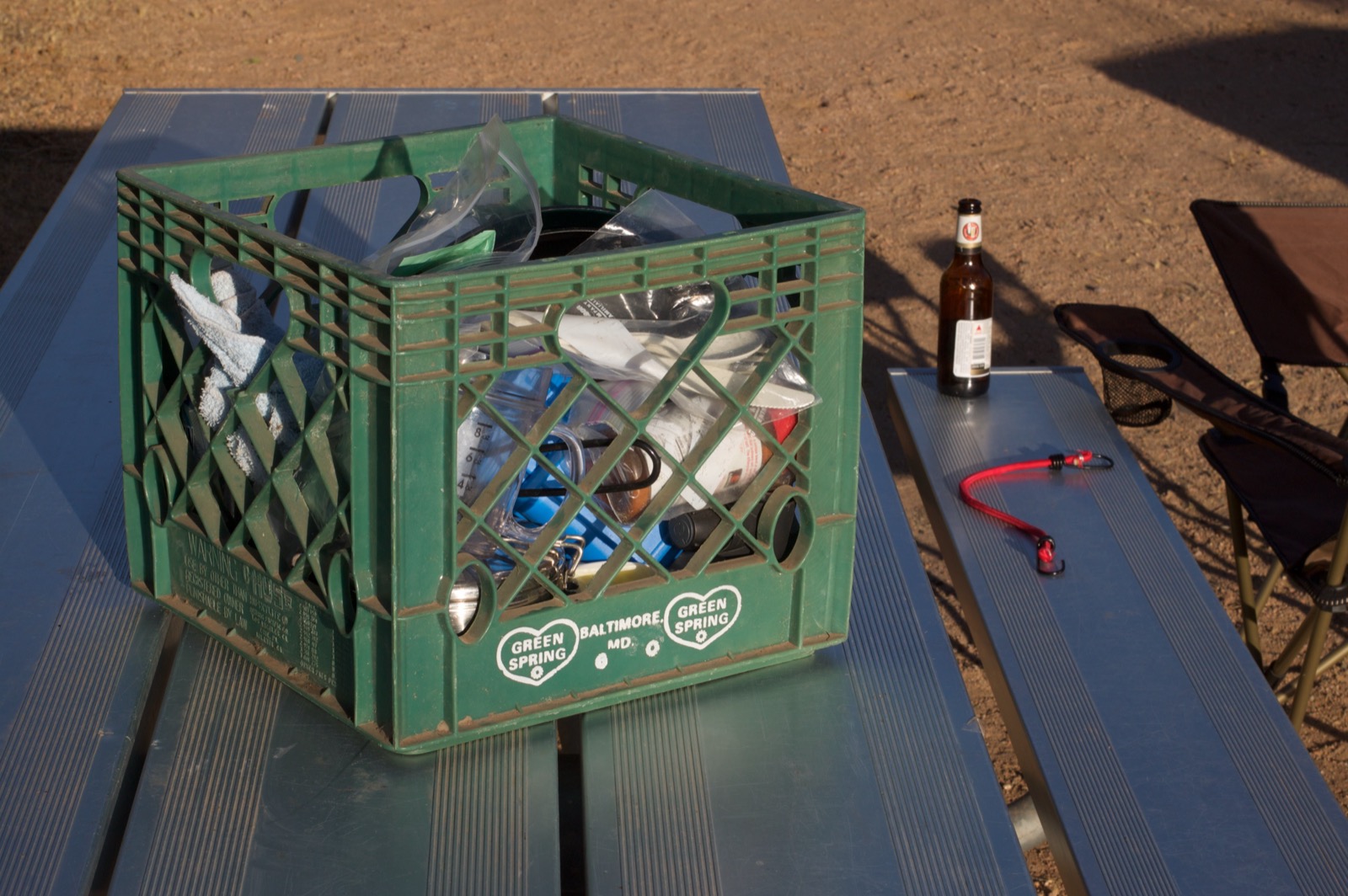
Choice of material (titanium, aluminium, steel), volume by number of people, and why pot kits are often over-complicated. How the cookware is matched to the type of stove is part of the same decision.
Cookware is the half of cooking outdoors that is not the stove. Good cookware boils quickly, weighs little, packs compactly and does not rust. A poor one matches the stove badly, has the angling that lets the soup run out when you pour, and makes food that tastes of the pot lid. The difference rarely costs much money — but it depends on choosing the right type for your use.
Materials — three basic choices
Aluminium is the most common material in outdoor cookware. Light (1–1.5 g/cm³), good heat conduction, cheap. The drawbacks: it can deform under heavy knocks, is sensitive to acidic foods (tomato soup leaves stains), and is not always durable against washing-up liquids over time. Anodised or coated aluminium is the most widely used in outdoor shops — it gives the surface durability and stops food from sticking.
Titanium is the lightest of all (60 % of aluminium). It withstands almost anything, never rusts, holds its shape. The drawbacks: poor heat conduction means “hot spots” where the food burns at the bottom while the rest of the pot is cold. Best for boiling water and simple dishes — less suited to slow cooking or frying. The price is 3–5 times aluminium.
Steel (stainless) is heavy (8 g/cm³ — 4–5 times as heavy as aluminium for the same volume) and has good heat conduction and distribution. Durable, cheap, perfect for home and cabin. On a carry trip, steel is only worth considering for short trips or when weight does not matter.
For ordinary trip use, aluminium is the standard choice. Titanium is for the weight-conscious or for long expeditions. Steel is for cabin use.
Volume — how big is enough?
Rule of thumb for boiling water:
- 0.5–0.75 litres — one person, boiled water or pouch food
- 1.0–1.3 litres — one person plus a little margin, or two sharing simple food
- 1.5–2.0 litres — two people with proper cooking
- 2.5–3.0 litres — three to four people, or one person making something more elaborate
- 4.0+ litres — group trip, camp cooking
For pouch soup and freeze-dried food you only need enough volume for the water plus the room the food expands into. For pasta, rice, or soup made from scratch, more room is needed so the contents can move without boiling over.
Two pots in different sizes are often better than one large one. The small one for boiling water, the large one for the main course. Many outdoor cookware sets are sold precisely this way, with the small one packing inside the large one.
Packing solutions and sets
Most manufacturers sell sets with two pots, a lid that doubles as a frying pan, and sometimes a cup and cutlery included. Classic examples: Trangia (alcohol-stove-based sets, classic Swedish construction, found in every Norwegian village outdoor shop), MSR Pocket Rocket / Reactor, Jetboil Flash / Sumo, Primus Lite / Fjellkok.
For Norwegian trip use, the Trangia 25 and 27 are still the most pragmatic choice for a fixed trip — robust, clear construction, alcohol as a fuel that is simple and reliable. For lightweight trip use or a mountain kitchen, the Jetboil-type integrated gas systems are faster and more efficient — they heat 0.5 litres in 2 minutes and use less gas.
Lid and practical details
A lid saves a significant amount of fuel (15–30 %) by keeping the heat in during boiling. A lid that can be used as a frying pan is a bonus.
Handles — detachable ones are light, but can be lost. Fixed ones are secure, but can burn your hands and are often in the way when packing.
A pouring rim around the top lets you pour without the contents dripping down the outside. A small point, a big difference over time.
A coating (PFOA-free, ceramic or PTFE-based) makes washing up easier but wears with metal cutlery. Not necessary for boiling water or pouch food, more relevant for frying.
Maintenance
Rinse with warm water and a little biological soap. Avoid a scouring sponge on coated pots. Aluminium can be scoured with steel wool if it is black and burnt on — titanium tolerates even more.
Dry it completely before packing, otherwise the knobs rust and the rubber handles rot. Aluminium can develop a white oxide coating in damp storage — it is not dangerous, but it looks unsightly.
Maintenance of outdoor equipment →
Text: Snuitide (2026).