Trip Leader
0 articles
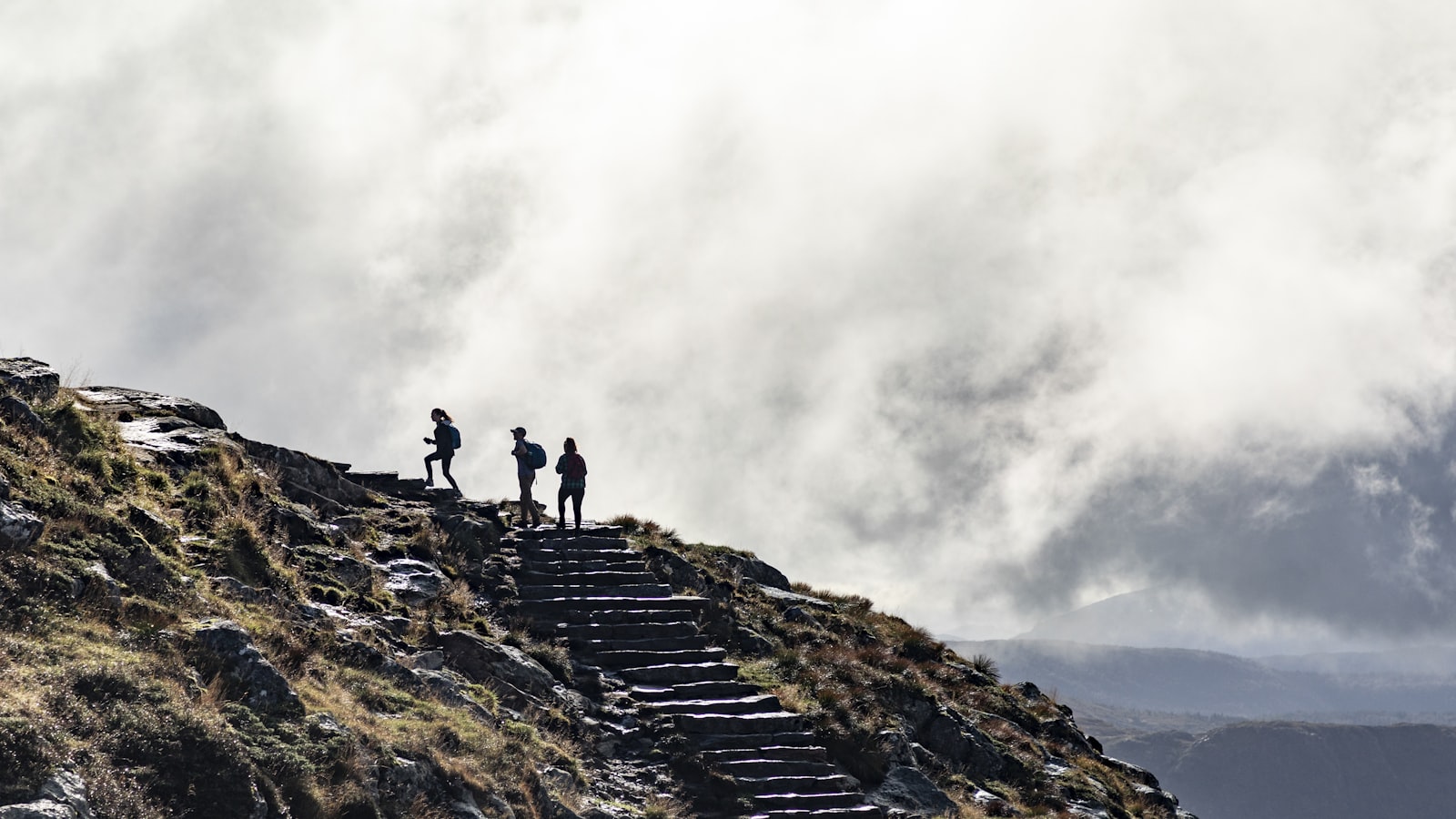
As a trip leader (turleder) you are responsible for the group — not only for safety, but for making sure everyone is doing well. You help create the experiences the group will remember, and you are the one who has to watch and think when the others are focused on their own trip.
What the trip leader is there to enable
Four things at once:
- Mastery (mestring) — that the participants manage what they came to manage
- Belonging and shared decision-making — that everyone feels part of the trip
- Safety — that the group gets there and home safely
- Good attitudes — towards nature, towards one another
These are not separate things — they hang together. A group with a good sense of mastery is safer because people are alert. A group with shared decision-making makes better decisions.
Mastery — what drives development
Mastery is about handling tasks and challenges at a level that is appropriately demanding. On a trip you get direct feedback from nature: the tent stands or blows down, the fire burns or dies. It is a pedagogical goldmine.
As a trip leader you can strengthen experiences of mastery by:
- Letting people do it themselves — even if you could do it faster
- Pitching the challenge appropriately — not too easy (boring), not too hard (giving up)
- Acknowledging the progress — even small steps forward
Belonging and shared decision-making
People need to feel that they can do something and matter to others. As a trip leader you are a role model who shows how the group should be.
Shared decision-making in practice:
- Discuss route choices openly — even if you have a favourite
- Let everyone contribute their competence: one can light a fire, one can read a map, one knows first aid
- Bring the participants into decisions — you have the final word, but not the first
- Ferdaråd before and during the trip (see below)
Safety — the trip leader’s main responsibility
You are responsible for getting the group there and home safely. Trip planning is the most important prevention — everything from route choice to weather check to packing list. On the trip your role is to maintain situational awareness: assess conditions, group and terrain continuously.
Trip planning and safety → · First aid on the trip →
Objective vs subjective hazards
- Objective hazards: conditions everyone can see — a steep slope, the weather, terrain traps. These are measurable.
- Subjective hazards: how each individual experiences the situation. These are real for the person, but vary with experience.
An experienced trip leader manages to assess objectively AND understand how the participants experience it subjectively. These are two different competences.
Ferdaråd
A ferdaråd is a formal gathering where everyone contributes their input. More than just a pre-trip brief — it is part of the safety work.
Before the trip:
- What kind of trip are we going on?
- Who is coming?
- What equipment do we need?
- When and how do we travel?
- The aim of the trip?
- Plan B and C?
Along the way:
- How is everyone feeling?
- Has everyone slept well?
- Are there any concerns?
- How is the weather compared with the forecast?
- Should we adjust the plan?
The ferdaråd is a duty to inform under the Product Control Act (produktkontrolloven) for organised trips — and a wholly central safety measure in any case. It should be mandatory on all trip-led outings.
Three relationships
As a trip leader you relate to:
- The participants — primary focus
- The organiser — the one who sent you out (school, club, DNT, company)
- A co-leader — if there are several of you
- Yourself — your own capacity, your own limits
Clarity in all four is necessary. A lack of agreement with the organiser can create conflict; a lack of role clarification with a co-leader can produce dangerous situations; a lack of self-insight is the most common reason trip leaders overestimate themselves.
Personal knowledge
Two foundational skills:
Self-insight — knowing your own capacity, your form on the day, the limits of your competence. You cannot make good decisions for the group if you do not see yourself clearly.
Social competence — reading the group, communicating clearly, handling conflict and differences. This develops through many different groups and different types of trips.
Courses and certification
Norwegian formal pathways:
- DNT trip leader (summer and winter versions, various levels)
- Norsk Fjellsportforum (NPF) certifications for climbing and ski-touring guiding
- Padleforbundet’s våttkort system for kayak and canoe
- Tindeguide (Norwegian and international UIAGM/IFMGA)
For school trips (physical education, friluftsliv subjects): teaching certificates and the DNT trip leader cover most of it.
Evaluation — what closes the loop
After a trip it is easy to just go home and think ‘good, that’s over’. The least practised and perhaps most valuable phase is evaluation:
- What worked?
- What would you have done differently?
- Which conditions had you not planned for?
- How was the group dynamic?
- What needs fixing in the packing list before the next trip?
A 5–10 minute conversation right after getting home is gold. Write a few notes — you forget more than you think.
Learn more
Related: Trip planning and safety → · First aid on the trip → · The significance of friluftsliv →
Text: Snuitide (2022), revised 2026.
Sources: Lundhaug, T. and Østrem, K. (2019). Friluftslivspedagogikk. · Beames, Higgins & Nicol (2012). Learning Outside the Classroom. · Jakobsen og Pulli (2021). Sikkerhet i nærmiljøfriluftsliv. · Ryan & Deci (2017). Self-Determination Theory. · DNT — turlederkurs.
No articles in this category yet.