Nature Areas
Access and movement in protected areas
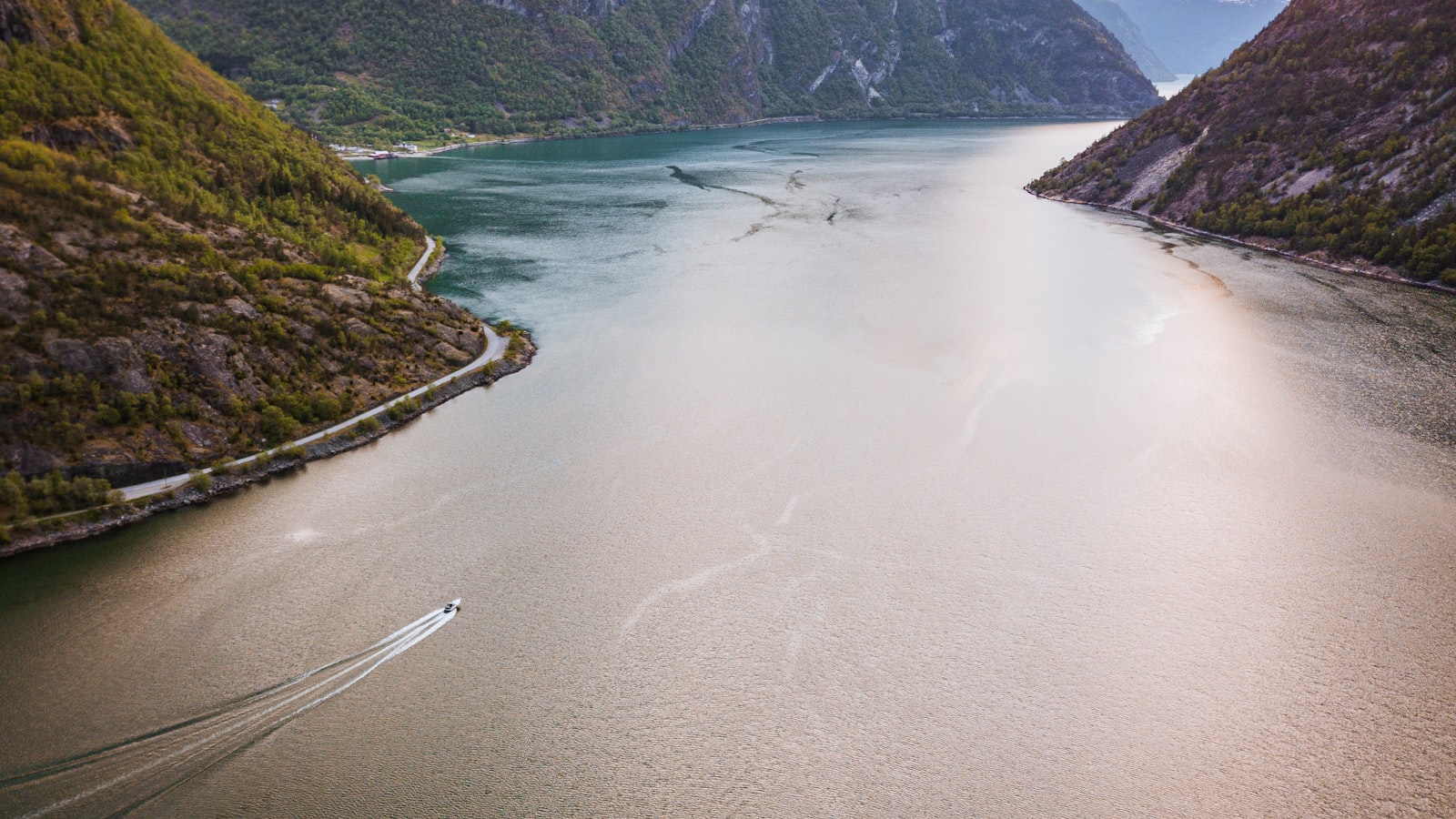
Allemannsretten applies in national parks and nature reserves too — but every protected area has its own regulations. How to read the sign, what is usually prohibited, and where to find the regulations.
In a protected area, two layers of rules apply at the same time:
- Allemannsretten (the right to roam) and the Outdoor Recreation Act (friluftsloven) — as in all utmark
- The protection regulations for the specific area
The second layer can tighten, but not widen, the first. Allemannsretten gives you freedom of access; the protection regulations can limit it where the land is vulnerable.
What is still allowed
In principle you may move freely in utmark, in protected areas too. This applies all year round, and on water as much as on land:
- On foot — summer and winter
- On skis
- By bike — on paths and roads (unless the regulations forbid it)
- By boat, canoe, kayak, SUP — on sea, lake and river
- Camping for one night under the right to roam — but many protected areas restrict or prohibit it
Picking berries, mushrooms and flowers is still permitted in most protected areas, but not in nature reserves where plant life is protected.
What is usually prohibited or restricted
Each protected area has its own regulations, but these prohibitions are common:
- Free camping — only at approved sites in many national parks, entirely prohibited in several nature reserves
- Motorised access — cars, ATVs, snowmobiles and e-bikes are usually prohibited
- Lighting fires — even outside the general fire ban (15 April – 15 September)
- Dogs off the lead — all year round in many areas, not only during the dog-on-lead period (båndtvang)
- Picking plants — nature reserves usually protect all plant life, including dead shrubs and trees
- Disturbing wildlife — especially nesting birds, calving wild reindeer, and denning areas for predators
Access restrictions in particular periods
Many protected areas have temporary access bans in vulnerable periods:
- The nesting season for seabirds — April to July/August, especially on bird skerries and in marine protected areas
- The calving season for wild reindeer — 15 April to 15 June in the wild-reindeer mountains
- The breeding season for predators and other vulnerable species
- The denning period — particularly in winter for bear and wolverine
These are typically made visible on signs and on the Environment Agency’s map. If they are broken, the wild reindeer may, for example, abandon an entire area — a trail can in practice act as a barrier.
How to read the protection sign
The sign at the entrance to a protected area gives three kinds of information:
- Type of protection — national park, nature reserve, landscape protection area (landskapsvernområde), marine protected area, or habitat protection area (biotopvernområde). It says a lot about how strict it is.
- Main rules — usually summarised with icons (camping, fire, dogs, motorised access, cycling).
- Special restrictions — nesting season, calving period, access bans.
If you come across a name that sounds unusual — ‘breeding area’, ‘functional area’, ‘biotopvern’ — it is usually an area with a specific biological function (spawning ground, nesting colony, denning area). The rules are often seasonal.
See forms of protection in Norway for what the various terms mean.
Why the rules are stricter here
The protected areas make up the most vulnerable biological areas in the country. Much has already been lost:
- The wild reindeer is near threatened on the Norwegian Red List — its habitats shrunk by barriers and disturbance
- Many bird species have migration patterns tuned to hours or days — a single disturbance can destroy a nest
- Plant communities in bog, mountain heath and salt marsh take decades to recover after wear
The rules are not arbitrary. They are often the result of research into what actually allows a population to survive.
If you are in doubt
Two resources resolve most questions:
- The Environment Agency’s map — click on a protected area and see the regulations
- Local national park centres and the County Governor (Statsforvalteren) — phone or visit before a trip
It is better to ask in advance than to risk breaking the regulations or disturbing wildlife.
Next steps
For an overview of where in Norway you find different types of trip terrain, see landscapes of Norway. For definitions of the various forms of protection, see forms of protection.
For leave-no-trace travel and a light footprint: sustainability. For the basic rule about allemannsretten outside protected areas: the Outdoor Recreation Act.
Learn more
- Miljødirektoratet — access in protected areas
- Norway’s national parks — before you go
- Statsforvalteren
- villrein.no — access in the wild-reindeer mountains
Text: Snuitide (2026), based on the Norwegian Environment Agency’s overview of regulations.