Value of Outdoor Life
Tasks on the value of friluftsliv
Being out in nature can give us surplus and energy to handle everyday life. Take a trip to a place with nature — do you notice the calm settling in?
The calm of the forest?
Being out in nature can give us surplus and energy to handle everyday life. Take a trip to a place with nature — do you notice the calm settling in?
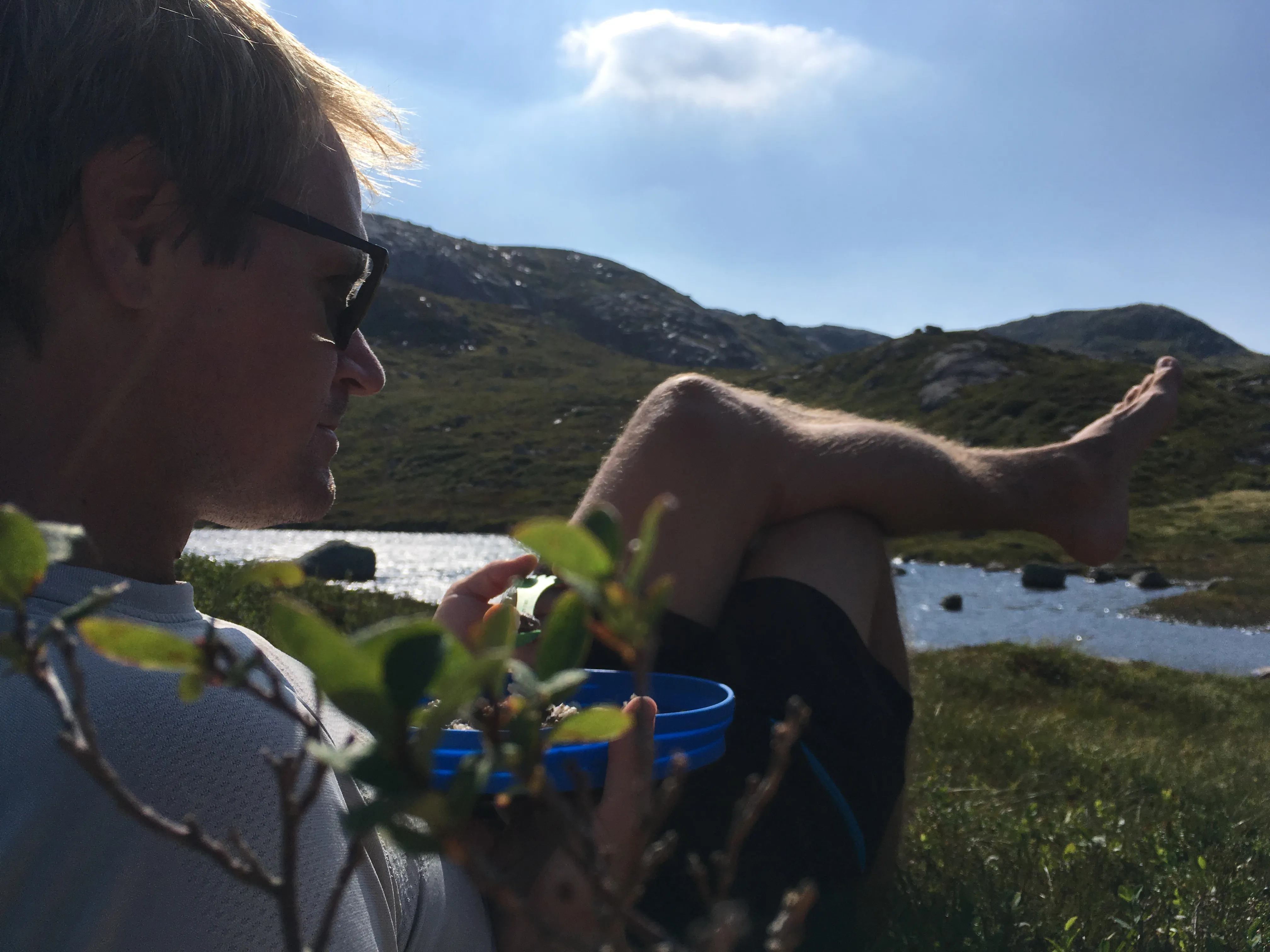
Photo: Gina Wigestrand
Out on a tur!
- Find a place with nature that you would like to visit. It can be in your local area, or somewhere a little further away. You can take a short stroll, a day trip or an overnight trip. Choose whatever suits you best. The most important thing is that you get out on a tur.
- While you are out: Notice the surroundings around you, the weather, plants and animals, and the feelings nature gives you. Pay attention to your breathing: Do you feel relaxed?
- Lie on your back and look up. What do you see? Try to describe what you see, and how you feel.
- Feel free to take photos and notes, and write a short trip account focusing on your own experience of being out on a tur.
Questions
- What positive effects does being out in nature have?
- Do you think being outdoors can have a good effect on our mental health?
- How can you use what you have experienced to argue for taking care of biological diversity?
- Discuss: Is it possible to measure the effect nature has on our health?
- Discuss the statement:
-
Nature seems to appeal to something fundamental in us. It gives us a joy in life, and it helps us to recreate mental balance when the modern way of life wears too hard on us. Experts hold that a life without contact with nature is not healthy for us.
(Miljøverndepartementet 2009, p. 14)
-
Background
Experiences in nature and being outdoors can lower stress levels and bring a sense of well-being and mastery. Many of us find a particular calm when we are out among the trees, swim in a lake or walk along a path without disturbances from school, work and other obligations. Professor Tove Fjeld, one of the pioneers in the field of plants and health, states firmly:
Biologically and physiologically we are where we were 10,000 years ago. The human being wants to be out in nature, for too much indoor living affects us negatively. That is to say, even though technological development has moved fast, human development has not moved equally fast. We still have a need to be out in nature.
Statistically, half of the population in Norway will develop a mental disorder over the course of their life, most often in the form of depression, anxiety disorders, and misuse of or addiction to intoxicants. This is often treated with talking therapy and medication, but physical activity and experiences in nature have also proved to be good treatment methods that increase quality of life.
- Norsk friluftsliv: Scottish doctors can give nature on prescription
Further work
A great deal of research has been done on the health effects of experiences in nature and physical activity, such as going for a tur. In the tasks below you can go deeper into two articles on the topic.
Task 1: stress
Many people experience a great deal of stress in everyday life. Stress over a longer period can cause serious health problems that may lead to long-term illness, such as depression, neck pain and headaches.
Read this article from NHI on what effects experiences in nature have against stress:
- Can you recognise yourself in everyday stress? Justify your answer.
- What effects do experiences in nature have against stress? Do you think these are effects people are aware of?
- Create a campaign to inform and motivate people to explore nature.
- Discuss the claim: «City life has negative effects on health.»
Task 2: mental disorders
Read this article from Tidsskriftet for Den norsk legeforening: Fysisk aktivitet for sinnets helse. What documented health effects does physical activity have against mental disorders and ailments?
More tasks
Å sette pris på naturen - Tverrfaglige temaer - NDLA
Two texts that lure you out into nature
How does a modern non-fiction text written by a professor, and a romantic poem, try to convince you that you should be out in nature more?
Next steps
- The value of friluftsliv — the hub
- Articles and research on the value of friluftsliv — subject material
- Traditional friluftsliv — cultural framing
Learn more
- Helsedirektoratet — physical activity — health benefits
- Norsk Friluftsliv — knowledge base and research
- Faarlund, N. — friluftsliv as a philosophical tradition